Gordon Ramsay Pizza Sauce Recipe
Gordon Ramsay pizza sauce is where your homemade pizza dreams come true. I remember the first time I tried to make sauce and ended up with a watery mess that made my pizza embarrassingly bland. But once I learned to balance the rich sweetness of tomatoes with the kick of garlic and a kiss of herbs, everything changed. This sauce is not just easy to make, but it’s the secret to elevating your pizza game. Say goodbye to store-bought junk and hello to a flavor bomb that saves time, boosts confidence, and makes your taste buds dance. Let’s roll up our sleeves and get cooking!
Recipe at a Glance – gordon ramsay pizza sauce
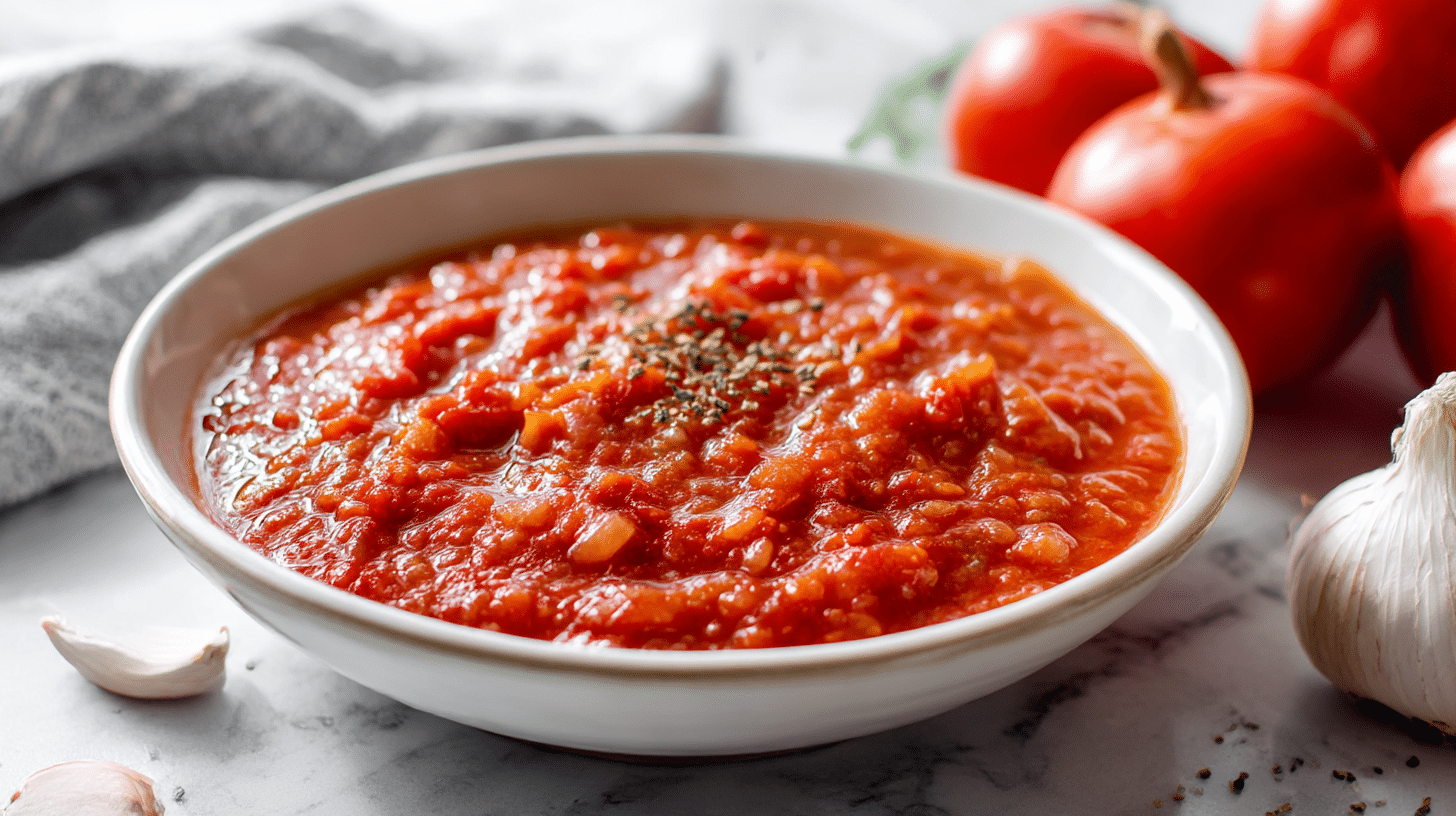

Gordon Ramsay's Homemade Pizza Sauce
Ingredients
Equipment
Method
- Blanch fresh tomatoes in boiling water for 30 seconds, then transfer to ice water, peel, core, and chop. For canned tomatoes, simply crush them with your hands or a fork.
- Dice the onion and mince the garlic finely, about 5mm pieces for even cooking.
- Heat a skillet over medium heat and add olive oil. Aim for a shimmer without smoke, around 175°C (350°F).
- Add the onion, sauté until translucent (5-7 minutes), then add the garlic and cook for another minute.
- Stir in the chopped tomatoes, bring to a boil, then reduce heat to low. Simmer uncovered for 30-45 minutes to thicken.
- If too thick, add water or stock to loosen. If too runny, continue to simmer.
- Taste and adjust seasoning with salt, sugar, or herbs. Squeeze lemon for brightness if needed.
Nutrition
Notes
Love this recipe?
Give us 5 stars and comment!Essential Components of Homemade Pizza Sauce
Fresh Tomatoes or Canned
When I make gordon ramsay pizza sauce, I always go for quality tomatoes. Fresh, ripe tomatoes (about 800g) work best, but if they’re out of season, don’t worry—canned whole tomatoes will do just fine. Choose the best you can find; it’ll really make a difference.
Allium Essentials
Onion and garlic are essential for flavor. I typically use one medium onion (about 150g) and 2-3 cloves of garlic. Chop them finely; they really bring the sauce to life. Make sure you don’t skimp on the garlic—it’s what makes the sauce special.
Seasoning Essentials
Keep it simple with a mix of oregano, basil, salt, and black pepper. Start with 1 teaspoon each of dried oregano and basil, and adjust to your taste. A sprinkle of sugar can help balance acidity; just follow your instincts.
Olive Oil and Acidity
A splash of olive oil (about 30ml) adds richness. I avoid overly acidic tomatoes to keep the sauce from tasting sharp. Look for brands that have a balanced flavor; it’ll save you a headache later.
Pizza Sauce Prep and Technique
Tomato Preparation
If you’re using fresh tomatoes, blanch them in boiling water for about 30 seconds, then dip them in ice water so the skins peel off easily. Core and chop; you want about 700g of usable tomato goodness. If you’re using canned ones, just crush them with your hands or a fork.
Aromatic Chopping
Dice your onion and mince your garlic. The finer you chop, the better they’ll sauté. Aim for small pieces, about 5mm across for even cooking. Keep an eye on your knife skills—smaller pieces work best!
Heat Management
Heat a skillet over medium heat and add the olive oil. You want it hot enough to shimmer but not smoke. If it gets too hot, the garlic will burn; too cool, and it won’t cook at all. Aim for a sweet spot around 175°C (350°F).
Cooking Steps for Gordon Ramsay Pizza Sauce
Sautéing Aromatics
Add the onion first, and sauté it until it becomes translucent (about 5-7 minutes). Then toss in the garlic and cook for another minute. Mix it well to prevent sticking; otherwise, you’ll burn the bottom.
Simmering the Sauce
Now, add your chopped tomatoes. Bring it to a boil, then lower the heat. Let it simmer uncovered for about 30-45 minutes, allowing it to reduce and thicken. Stir occasionally; no one wants burnt bits stuck at the bottom!
Adjusting Consistency
If your sauce is too thick, add a bit of water or stock to loosen it up. On the other hand, if it’s too runny, let it simmer a bit longer. The perfect pizza sauce should be spreadable but not watery.
Final Seasoning
Give the sauce a taste and adjust with salt, sugar, or herbs to your liking. A squeeze of lemon can brighten it up if it’s too rich. This is your moment—make it your own!
Variations and Adjustments
Adding Herbs
Want to change things up? Fresh herbs like basil or parsley can be added at the end. Use about 15g of chopped fresh herbs for an extra burst of flavor. Dried works fine, but fresh really brings out the best.
Spice Adjustments
If you want a bit of heat, consider adding red chili flakes or a dash of cayenne. Start with a ¼ teaspoon, but taste as you go. Too much can throw off the balance, so be careful!
Cooking Time Differences
If you’re in a hurry, a pressure cooker can speed things up—cut the time to about 15 minutes for a consistent sauce. Just remember to release the pressure slowly to avoid splatters.
Alternative Tomato Sources
Try experimenting with roasted tomatoes or tomato paste for different flavors! You can swap part of the fresh tomatoes with 70g of paste for a deeper taste. Just adjust your liquid amounts accordingly.
Common Issues and Fixes
Sauce Too Watery
If your sauce turns out too runny, simmer it longer to evaporate the excess moisture. You can also mix in a small amount of tomato paste to thicken it up.
Overly Acidic Flavor
Balance out acidity with a pinch of sugar or a splash of cream. Adding a bit of butter (15g) can help round out the flavors as well. Trust your taste buds!
Lack of Depth
If the sauce seems flat, boost it with a splash of balsamic vinegar or a touch of soy sauce. Both can add nice layers of flavor. But go easy—not too much at once!
Improper Seasoning
If your sauce is tasting bland, give it a wake-up call with more seasoning! Gradually add kosher salt and taste frequently until it reaches the right point. Better safe than sorry!
Storage Tips and Reheating
Storage Recommendations
Your homemade sauce can stick around in the fridge for about a week in an airtight container. For longer storage, freeze in portions for up to three months. Label them to prevent mystery meals!
Reheating Tips
Reheat on the stove over low heat while stirring gently to avoid scorching. If it’s too thick after freezing, just add a splash of water or broth. Keep it low and slow for the best results.
Ingredient Substitutions
You can swap olive oil for grapeseed or avocado oil. If you’re out of fresh garlic, garlic powder can be a decent substitute—just use about ½ teaspoon for every clove.
Use for Other Dishes
This sauce isn’t just for pizza! Use it for pasta, shakshuka, or as a dipping sauce for breadsticks. Get creative; the possibilities are endless!

Step-by-Step Video: Gordon Ramsays Relish Recipe is the PERFECT Pizza Sauce …
FAQ – gordon ramsay pizza sauce
How do I prevent a watery sauce?
Simmer the sauce longer to evaporate excess liquid and concentrate the flavors.
What can I do if the sauce is too acidic?
Add a small amount of sugar to balance the acidity without overwhelming the sauce.
Can I use canned tomatoes instead of fresh?
Yes, San Marzano tomatoes are highly recommended for their sweetness and low acidity.
How long can I store the pizza sauce?
Store in an airtight container in the refrigerator for up to one week or freeze for longer preservation.
Before you start cooking…
Finally nailing your gordon ramsay pizza sauce is like discovering the secret ingredient in happiness—it’s rich, it’s bursting with flavor, and it’s entirely yours! Picture this: a rich tomato base clinging to your pizza crust, topped with gooey cheese, and the aroma filling your kitchen until you’re practically drooling. What a triumph! Now it’s your turn—make it bold, make it yours. Experiment, taste, and adjust, because the best recipes are the ones that reflect who you are. Get ready for pizza night to become the highlight of your week!