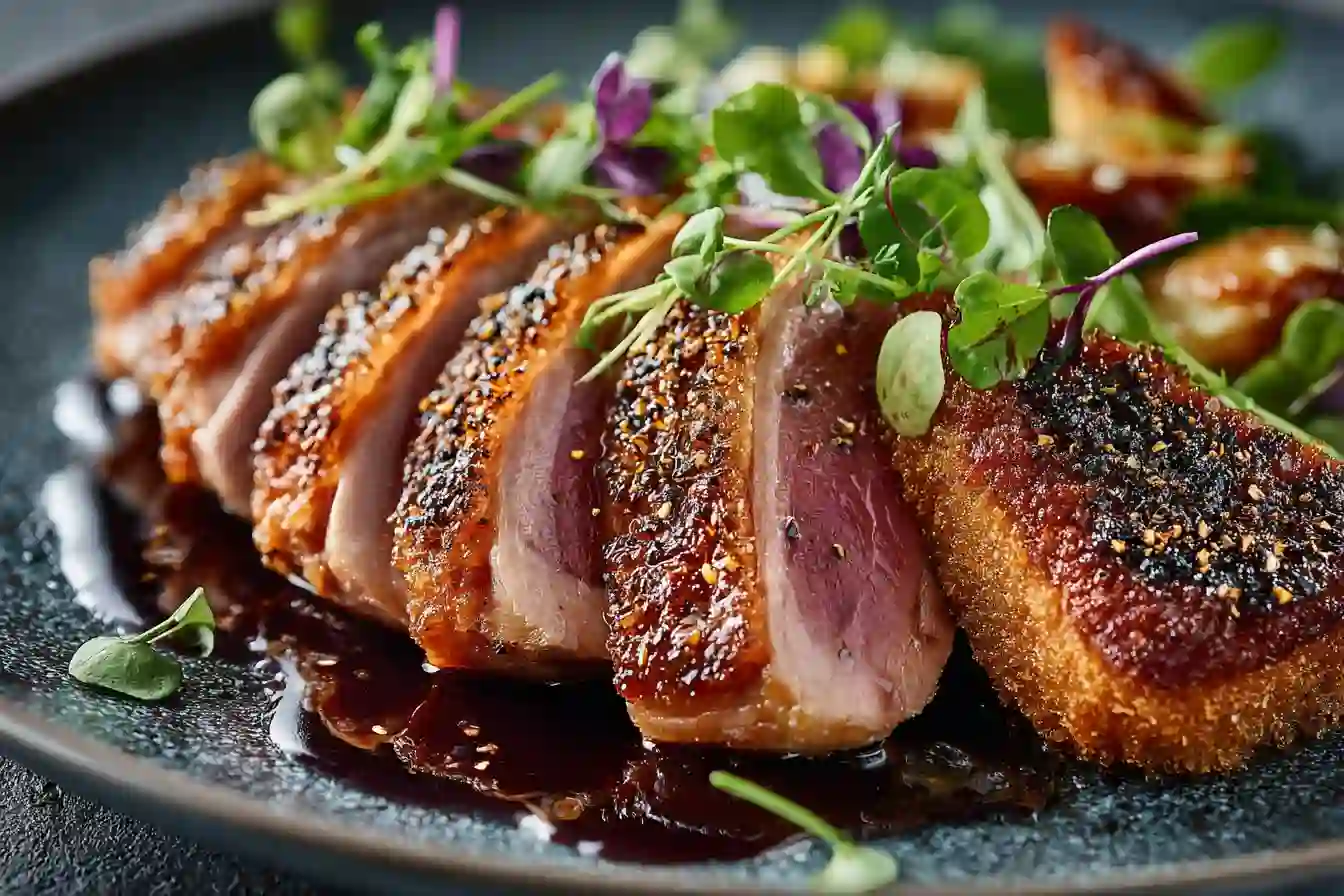
Gordon Ramsay Duck Breast : 5 Expert Tips to Nail it at Home
Gordon Ramsay Duck Breast taught me something that flipped my cooking world upside down: crispy skin isn’t a mystery—it’s a commitment. I learned that lesson one frantic dinner party evening when I rushed the duck, skipped the render, and ended up with greasy leather. I needed help, so I turned to Ramsay—and found the Gordon Ramsay Duck Breast trick that changed everything.
The Moment I Screwed Up (And What Ramsay Taught Me)
It was a Thursday. I had duck breasts ready, guests arriving in ten minutes, and a bottle of red wine uncorked. I slammed those breasts into a hot pan and thought I’d nailed it. Nope. The skin shriveled, fat pooled everywhere, and the meat was overcooked on one side. I looked up Ramsay’s method. He said, “Don’t seal it hard—start cold.” That’s when I realized the secret behind his signature Gordon Ramsay Duck Breast.
Why That Cold Pan Trick Works
The cold pan starts fat rendering slow and steady. It lets the skin brown beautifully without burning. That’s essential when you want Gordon Ramsay Duck Breast perfection. Think of it like slowly coaxing flavor instead of demanding it. The result? Crispy, golden skin and medium-rare meat that speaks for itself.
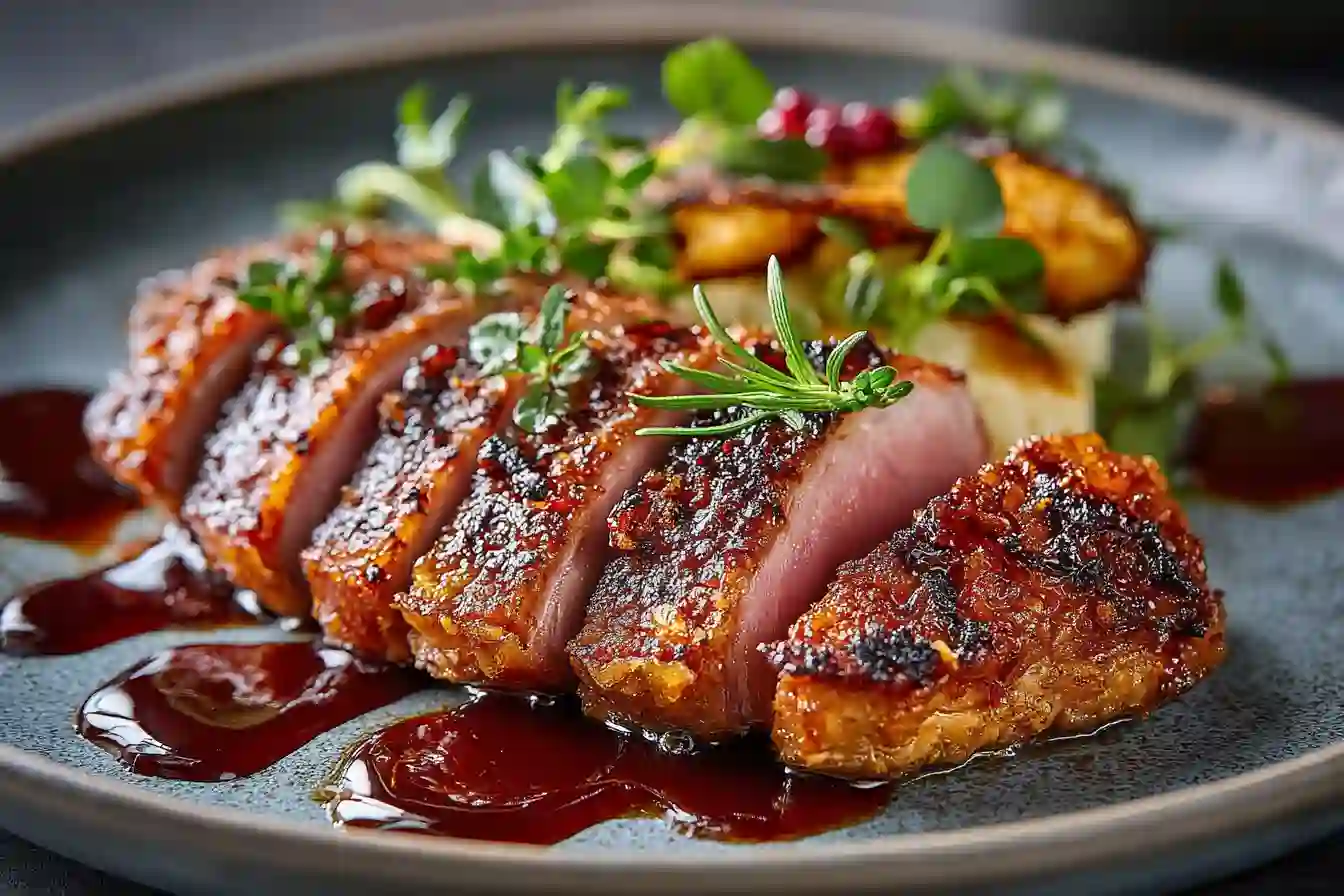

Gordon Ramsay Duck Breast
Ingredients
Equipment
Method
- Score the duck skin in a crosshatch pattern. Season both sides with salt and pepper.
- Place duck breasts skin-side down in a cold, dry cast iron pan.
- Turn heat to medium-low and render the fat slowly for 6–10 minutes until golden brown.
- Flip and sear meat-side for 1–2 minutes.
- Transfer to a 400°F oven and cook for 5–7 minutes or until internal temp hits 125–130°F (52–54°C).
- Remove and rest for 5 minutes before slicing.
- For sauce: pour off most duck fat, add garlic and thyme to pan. Deglaze with wine, reduce by half. Add stock, reduce again. Off heat, swirl in butter.
Nutrition
Love this recipe?
Give us 5 stars and comment!Ingredients
- 2 duck breasts (skin-on, about 8 oz each)
- Kosher salt and black pepper
- 2 sprigs fresh thyme
- 1 clove garlic, smashed
- ½ cup dry red wine
- ½ cup chicken or veal stock
- 1 tbsp cold unsalted butter (for sauce)
Step-by-Step: How I Cook It Now
- Score the skin in a diamond pattern—don’t cut the meat.
- Season both sides with salt and pepper.
- Place breasts skin-down in a cold pan—no oil.
- Turn heat to medium-low. I wait 6–10 minutes, watching fat render.
- I flip, sear the meat-side 1–2 minutes, then hit it with high heat if needed.
- Into a 400°F oven for 5–7 minutes to perfect medium-rare.
- Rest for 5 minutes before slicing.
- I often use the drippings to make a quick red wine sauce with garlic and thyme—classic Gordon Ramsay Duck Breast flourish.
Gear That Matters
I use a cast-iron pan—it holds heat evenly for that slow render. A sharp knife for the scoring, and a meat thermometer to nail 125–130°F internal temp. Simple, but essential for real Gordon Ramsay Duck Breast results.
When It Didn’t Work—And How I Fixed It
Once, I got greedy and bumped the heat up too early. Skin burnt, meat raw. I learned to respect the rhythm. Now I trust the process—even if it takes patience. That’s what makes Gordon Ramsay Duck Breast stand out: respect for time and technique.
Serving and Variations
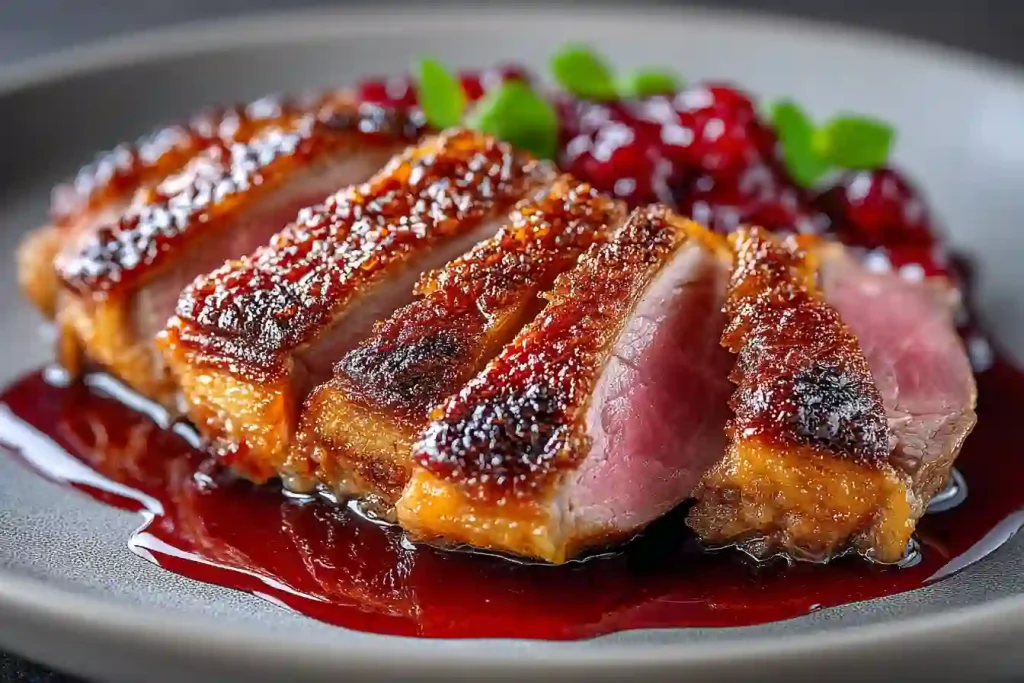
I slice the breast, pour over the pan sauce, and garnish with thyme. Serve with roasted potatoes and a simple salad. For a twist? Try a cherry‑Port reduction. Still counts as Gordon Ramsay Duck Breast, just with personality.
FAQs (Because You’ll Ask)
How long does it take?
About 20 minutes total: 10 for fat render, 2 for sear, 7 in the oven, plus rest.
Can I skip the oven?
Sure, but finish on medium‑high for 3–4 minutes per side. Just watch that temp.
What’s the ideal internal temp?
Aim for 125–130°F (medium-rare). Let it rest—it’ll come up a few degrees.
My Final Verdict
Once I committed to the slow render and cold‑pan method, everything clicked. That first crispy slice, the pink meat—it’s why Gordon Ramsay Duck Breast became my go‑to showstopper. It’s more than a recipe. It’s a reminder: precision and patience turn common ingredients into something unforgettable.
Your Turn – Let’s Cook Like Ramsay
You’ve got the method, the mindset, and the duck. Now it’s time to bring that energy to the rest of your poultry game. Check out our chicken section for more Ramsay-level bird brilliance. Because this? This was just the warm-up.