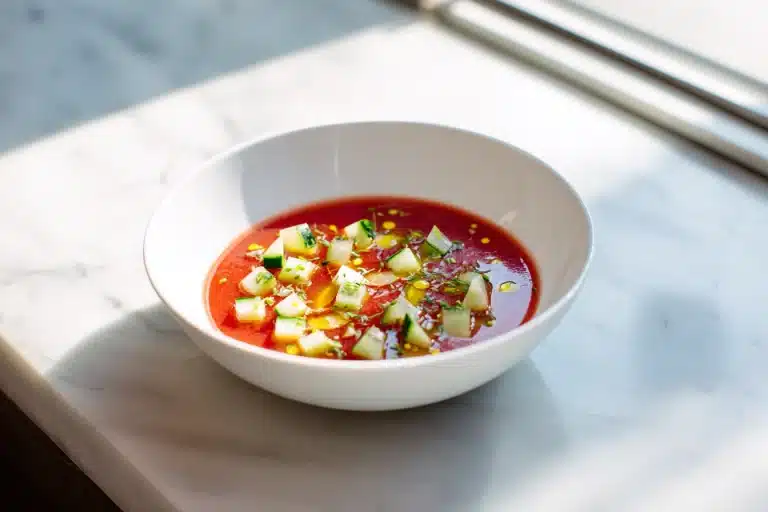
Gordon Ramsay Tomato Soup Pesto Recipe
Gordon Ramsay tomato soup pesto is the dish that made me realize soup doesn’t have to be boring. I used to think canned was good enough until I tasted a rich, flavorful, and vibrant bowl made from scratch, bursting with fresh tomatoes and aromatic basil. This recipe is my go-to when I crave something comforting yet impressive for guests or a cozy night in. It’s about transforming simple ingredients into a bowl of pure joy. Plus, the pesto adds a spark of flavor that takes it over the top without breaking a sweat in the kitchen. Let’s roll up our sleeves and dive into a soup that’ll warm your soul and impress anyone lucky enough to share a bowl.

Essential ingredients for gordon ramsay tomato soup pesto
Tomatoes — exact types, weights, and what they do
Start with 1.2–1.5 kg ripe tomatoes (Roma or plum for flesh, or a mix with vine-ripened for sweetness). If I use canned, I choose 2 x 400 g cans of quality plum tomatoes (drained weight ≈ 780–800 g). Roast fresh tomatoes halved to concentrate flavor; canned ones go straight into the pot. Use 30–45 g (2–3 tbsp) extra-virgin olive oil for roasting or sweating — enough to carry flavor without drowning it.
Tomato acidity matters. If the batch tastes sharp, I balance it with 5–10 g sugar or 15–30 g unsalted butter. For body, add 300–400 ml vegetable or chicken stock and adjust until the thickness feels right. Tip: weigh your tomatoes; vague measures like “a handful” are how you end up with watery soup at dinner. Keep things measured so you can repeat the result.
Pesto ingredients with precise measures and swaps
For the pesto ribbon I aim for 30 g fresh basil leaves, 25 g Parmesan (finely grated), 20 g pine nuts (lightly toasted), 1 garlic clove (10 g), 60–75 ml extra-virgin olive oil, a pinch of salt (1–2 g) and 1 tsp lemon juice (5 ml). Blitz until smooth but still textured. If you want a chunkier pesto, cut the oil by 10–15 ml and crush with a fork.
Allergies or low on pantry staples? Swap pine nuts for 25 g walnuts or almonds, or 20 g sunflower seeds for a nut-free option. Replace Parmesan with 25 g nutritional yeast for a vegan version and use 70 ml olive oil to make up for moisture. Tip: use good oil — poor oil ruins good tomatoes. I make the pesto just before serving so basil stays bright and green.
Aromatics, dairy, and finishing touches — exact amounts
Aromatics: 1 medium onion (150 g), finely chopped, and 2 garlic cloves (20 g) minced. Sweat these in 20 g butter or 30 ml olive oil over medium heat for 6–8 minutes until translucent. For a richer finish, stir in 60–80 ml double cream at the end; for a lighter soup use 80–100 g Greek yogurt stirred in off the heat.
Seasoning: 6 g fine sea salt (1 tsp) to start, taste and add up to 3 g more. Black pepper 1/2 tsp (1 g). If you want a herb lift, add 5–10 g chopped basil at the finish. Tip: add dairy off the heat to prevent splitting. Measure everything — guessing at “a splash” is how you over-salt.
Tools, prep and safety — what to have ready
Must-have equipment and why each one matters
I use a heavy-based 3–4 litre saucepan for even heat, a rimmed baking tray for roasting, a blender (immersion or countertop), a fine mesh sieve or chinois, digital kitchen scales, and a heatproof spatula. A thermometer helps with reheating — soups should reach 74°C (165°F). A food processor speeds the pesto, but a mortar and pestle gives nicer texture.
If you roast, line the tray with parchment or spray lightly to avoid sticking. For blending hot liquids: use an immersion blender in the pot, or if using a countertop blender fill to two-thirds and vent the lid with a towel to avoid pressure explosions. Tip: never run a cold blender with hot liquids sealed — it’s a scald hazard.
Prep timeline and mise en place with exact times
Chop onion and garlic (10–12 minutes), halve tomatoes (10–15 minutes), toast nuts for pesto (4–6 minutes), make or measure stock (2 minutes). Roast tomatoes 30–40 minutes at 220°C/425°F, or blister on the grill for 8–12 minutes, or air-fry at 200°C/400°F for 12–18 minutes. While tomatoes roast, sweat the aromatics (6–8 minutes) and prepare pesto (6–8 minutes).
Total active time ≈ 40–50 minutes, passive roasting 30–40 minutes. Tip: do the pesto last so the basil stays bright. Sticking to this timeline saves you from frantic seasoning mistakes.
Food safety, storage, and cooling specifics
Cool cooked soup quickly: transfer to shallow containers and chill to below 5°C within 2 hours. Refrigerate for up to 3–4 days. Freeze portions (300–500 ml) for up to 3 months; thaw overnight in the fridge and reheat to 74°C. Label containers with date and contents.
When reheating, bring soup to a rolling simmer on the stove and check it reaches 74°C with a thermometer. If adding cream or yogurt, reheat first and stir them in off-heat to avoid curdling. Tip: never cool a hot pot with the lid on — that traps heat and keeps food in the danger zone (5–60°C) too long.
Roast, simmer, blend — the cooking method explained
Roast tomatoes: oven, grill, pan and air-fryer comparisons
Oven roast at 220°C/425°F for 30–40 minutes until skins blister and edges char; roasting concentrates sugars and gives caramelized notes. Grill on high direct heat and blister for 8–12 minutes, turning once — faster but less even. In a heavy skillet, cook halved tomatoes cut-side down for 8–12 minutes to brown; great if you want quick pan-roasted flavor. Air fryer at 200°C/400°F for 12–18 minutes, shaking halfway.
Each method changes the final flavor: oven gives deep caramelization, grill adds smoky char, pan creates fond, and air fryer crisps efficiently. Tip: if tomatoes are watery, roast longer to evaporate excess liquid. Keep an eye on timing; char adds flavor, burnt tastes bitter.
Simmering, seasoning, and exact timings for the pot
After sweating onions and garlic (6–8 minutes) add roasted or canned tomatoes and 300–400 ml stock. Bring to a boil, then drop to a gentle simmer (low bubble) for 12–20 minutes so the flavors marry. Stir now and then and skim any foam for a cleaner finish.
Season in stages: add 6 g salt at the start, re-taste after 10 minutes and adjust by 1–2 g increments. Add 5–10 g sugar only if acidity bites. If using cream, stir 60–80 ml in off the heat. Tip: simmer, don’t boil; vigorous boiling can break flavor and make the soup thin.
Blending and straining — texture control and safety
Cool the pot to about 60°C before transferring to a countertop blender; if using one, vent the lid to release steam. Blend to the smoothness you want: 30–60 seconds for silky. For an ultra-smooth finish, push the soup through a fine mesh sieve or chinois with the back of a ladle — expect 1–2 tablespoons loss to the sieve.
If you prefer rustic, use an immersion blender in the pot and stop at 15–30 seconds. Tip: if your soup splashes, it was too hot or the blender was overfilled — always blend warm, not piping hot, and hold a towel over the lid.
Making and using the pesto — technique and alternatives
Classic basil pesto with exact steps and timing
Toast 20–25 g pine nuts in a dry pan for 2–4 minutes until golden. In a food processor combine 30 g basil, toasted nuts, 25 g Parmesan, 1 garlic clove (10 g), 1/4 tsp salt (1.5 g) and pulse. With the motor running add 60–75 ml extra-virgin olive oil in a steady stream until emulsified. Scrape down and taste — add 1 tsp lemon juice if it needs brightness. For more on the background of pesto, see the source.
Make pesto 5–10 minutes before serving to keep color. Store covered with a thin layer of oil in the fridge up to 48 hours. Tip: don’t over-process — you want texture; if it’s paste-like, add 10–15 ml oil and pulse once.
Pesto variations — 3+ swaps for dietary needs and flavors
Walnut pesto: replace pine nuts with 25 g toasted walnuts and shave Parmesan back to 20 g. Arugula pesto: half basil, half arugula (15 g each) for peppery heat. Vegan pesto: swap Parmesan for 25–30 g nutritional yeast and use 70–80 ml olive oil for richness. Add 5 g lemon zest for citrus lift.
Spicy option: add 1–2 tsp harissa or 5–8 g red pepper flakes. Nut-free: 25 g toasted sunflower seeds replace nuts. Tip: adjust oil to get a spreadable but not runny pesto — it should ribbon through soup, not disappear.
How to present and swirl pesto without disaster
Ladle hot soup into bowls, leaving 1–2 tbsp space. Dollop 1–2 tsp (5–10 g) pesto per bowl, then use the back of a spoon to drag it into a swirl for a marbled effect. For a clean look, use 1 tsp oil to thin stiff pesto; for rustic bowls, a larger spoonful (15–20 g) makes a bold streak.
If serving a crowd, warm pesto slightly (not hot) to loosen it for spooning — never heat above 40–45°C or basil will go bitter and dull. Tip: add pesto at the table, not during reheating, to keep aroma and color bright.
Common mistakes, quick fixes, and pro-level hacks
Fix watery or thin tomato soup — three reliable rescues
Reduce over 10–20 minutes on low heat to evaporate excess liquid, stirring so nothing sticks. Add 50–75 g cooked, mashed sweet potato or 60–80 g canned drained beans for body without a gluey taste. Or blitz 40–50 g stale bread into crumbs and stir in, then simmer 5 minutes — it thickens and adds flavor.
If reduction dulls acidity, brighten with 5–10 g sugar or 1 tsp lemon juice (5 ml). Tip: avoid cornflour unless you want a gluey finish — use reduction or actual ingredients for texture.
Bitter, bland, or split — precise fixes
If bitter: add 5–10 g sugar or 15–30 g unsalted butter to round bitterness. If bland: add 3–5 g salt at a time, and 5–10 g tomato paste or 15–30 ml Worcestershire for umami. If the soup curdles after adding cream, whisk in 1 tbsp cold water or a small splash of yogurt off-heat to re-emulsify, or blend briefly.
If the soup is too acidic, add a 100 ml ladle of stock or cook a peeled potato in the soup for 10–15 minutes then remove to mellow the flavor. Tip: correct seasoning in small increments — you can always add, but you can’t take salt away.
Texture trouble — grainy, watery pesto or overblended issues
Grainy pesto usually means over-toasting nuts or overheating basil. Fix it by adding 10–20 ml oil and pulsing briefly, or stir in a tablespoon of liquid Parmesan cream. If pesto separates, pulse in 10–15 ml hot water while blending to bring it back together.
If the soup went gluey from too many thickening agents or over-reduced starches, dilute with 50–150 ml stock and reheat gently. Over-blended soup can be aerated and frothy; let it sit 10 minutes before serving to deflate. Tip: texture problems often come from heat misuse — cooler handling at blending and finishing preserves structure.
Serving, variations and nutrition — how to plate and tweak
Three variations to change the dish (roasted red pepper, harissa, vegan)
Roasted red pepper: roast 2 red peppers, peel, and add to the pot with tomatoes for a sweeter, smoky soup. Harissa kick: add 1–2 tsp harissa paste (6–12 g) during simmering for North African heat. Vegan version: use 300–400 ml vegetable stock and replace Parmesan with 25–30 g nutritional yeast in the pesto, swap butter for 30 ml olive oil.
Seafood twist: stir in 150–200 g cooked shrimp at the end and heat through to 74°C for a protein-forward bowl. Tip: taste after each change — small additions drastically alter the balance.
Two–three serving suggestions and pairings
Classic pairing: grilled cheese made with 100–120 g cheddar on sourdough; cut into triangles and serve alongside for dunking. Fancy: pan-seared scallops (3 per person, 30–45 seconds per side) on top of the soup with a pesto smear. Rustic: garlic croutons — toss 150 g cubed day-old bread with 30 ml olive oil, 1 crushed garlic clove, 1 tsp salt; bake at 200°C/400°F for 8–10 minutes.
For wine, a crisp Sauvignon Blanc or a light Chianti complements acidity. Tip: serve pesto at the table to keep it bright; place bowls on a warmed surface to hold heat.
Nutrition, benefits, and smart swaps — exact guidance
Standard portion (≈350–400 ml with 1 tsp pesto) is roughly 200–280 kcal depending on cream and oil use. Using 80 ml cream adds ~200 kcal per pot; swapping for 80 g Greek yogurt cuts calories and adds 10–12 g protein. Tomatoes give vitamin C, potassium, and lycopene — a little fat (olive oil or cream) helps your body absorb lycopene.
To lower sodium: use low-salt stock and reduce added salt by 3–4 g; taste and adjust. To increase protein: stir in 100–150 g cooked lentils or 120–150 g shredded chicken per pot. Tip: small swaps change nutrition a lot — swap cream for yogurt and you keep creaminess with fewer calories and more protein.


Gordon Ramsay’s Tomato Soup with Pesto
Ingredients
Equipment
Method
- Preheat oven to 220°C (425°F). Halve fresh tomatoes and place on a baking tray.
- Drizzle with olive oil and roast for 30-40 minutes until skins blister and edges char.
- While roasting, sweat onions and minced garlic in a saucepan with butter or olive oil over medium heat for 6-8 minutes.
- Add roasted tomatoes and stock to the saucepan. Simmer for 12-20 minutes to marry flavors.
- Blend the soup to desired smoothness, then taste and adjust seasoning.
- For the pesto, pulse together basil, cheese, nuts, garlic, lemon juice, and oil until smooth.
- Serve the soup hot, swirled with pesto on top for added flavor.
Nutrition
Notes
Love this recipe?
Give us 5 stars and comment!Video tutorial: gordon ramsay tomato soup pesto
FAQ – gordon ramsay tomato soup pesto
Can I use canned tomatoes instead of fresh ones?
Yes! If time is short or fresh tomatoes aren’t in season, go for quality canned plum tomatoes. Just remember to drain them enough to avoid a watery soup!
What kind of stock should I use?
You can use either vegetable or chicken stock depending on your dietary preferences. Just keep in mind that chicken stock adds a richer flavor while vegetable is lighter.
How do I store the leftovers?
Cool your soup quickly in shallow containers and store in the fridge for up to 3-4 days. It freezes well too; just portion it out and freeze for up to 3 months!
Conclusion
Finally nailing Gordon Ramsay’s tomato soup pesto is a downright triumph. You’ve created something that not only looks gorgeous in the bowl but also makes your kitchen smell like a little slice of heaven. The rich, tangy flavors dance on your palate, and the brightness from the pesto just pulls it all together. Picture this: the silky soup, a drizzle of vibrant green pesto, and a hint of freshness from the basil. It feels like a win not just in the kitchen, but in life! Now it’s your turn — make it bold, make it yours.