Gordon Ramsay Tomato and Basil Salsa Recipe
Gordon Ramsay tomato and basil salsa changed my approach to fresh flavors. You see, I used to think throwing together a bunch of tomatoes was salsa, but Ramsay taught me the art of balance and technique. This isn’t just about tossing tomatoes in a bowl; it’s about creating a vibrant dish that bursts with flavor. Trust me, you’ll save time and impress your friends with this simple yet fantastic recipe. Let’s roll up those sleeves and dive into a salsa that’ll make your taste buds sing!

Ingredients for a gordon ramsay tomato and basil salsa–style mix (precise amounts)
Fresh tomato base — how much to use and why
Use 600 g ripe tomatoes (about 3–4 medium or 4–5 plum tomatoes) as your base. That weight gives you roughly 2 cups of chopped tomato, which makes about 4 generous servings. Choose tomatoes that give slightly under pressure — ripe but firm; overly soft tomatoes turn mushy fast.
If you want roasted depth, reserve 150–200 g to roast or char (see methods later). I weigh tomatoes after trimming and coring — volume can mislead when water content varies. Prep an extra 100 g if you expect guests or want leftovers for breakfast the next day.
Aromatics, acid, oil and seasoning — exact measures
Aromatics and seasoning make the salsa sing. Use:
- Red onion: 60 g finely diced (about 1/4 large onion)
- Garlic: 2 cloves (6–8 g), minced
- Fresh basil: 20 g packed leaves, finely chiffonade (about 1 cup loosely packed)
- Extra-virgin olive oil: 30 ml (2 tbsp)
- Lime juice: 30 ml (2 tbsp) or red wine vinegar 15 ml (1 tbsp) if you prefer
- Sea salt: start with 1 tsp (6 g) and adjust
- Black pepper: 1/4 tsp freshly cracked
Combine and taste — acidity and salt balance the flavors. Start low on salt and lime; you can always add more but you can’t take it away. If using cherry tomatoes, halve 700 g instead of dicing.
Optional extras, texture enhancers and the salt curve
Want crunch or smoke? Consider:
- Cucumber: 50–70 g peeled, seeded, diced for crunch
- Bell pepper: 40–50 g for sweetness and color
- Jalapeño: 1 small seeded if you want heat (10–15 g)
- Capers or finely diced cornichons: 15–20 g for briny pop
If sweetness is missing, add 1/4 tsp (1 g) sugar or 5 ml honey. For salt control, season in three passes: 50% at mix, 30% after 10 minutes, final 20% just before serving. Under-seasoned salsa will taste flat; seasoning in stages lets flavors open up.
Classic prep and assembly for vibrant tomato and basil salsa
Prepping tomatoes — seeding, dicing and timing
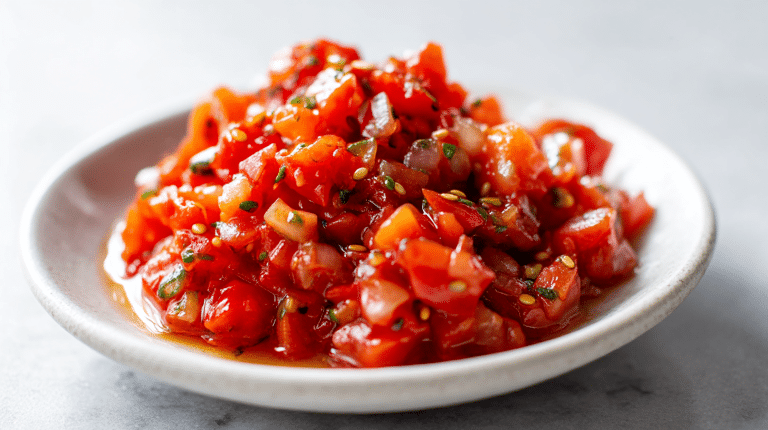
Trim the core and dice tomatoes into roughly 8–10 mm pieces so the salsa holds together. If they’re seedy and watery, halve and scoop seeds with a teaspoon, then dice the flesh — you’ll lose volume but gain texture. For plum tomatoes, quarter and dice; for cherry, halve or quarter depending on size.
Work quickly to avoid bruising. If diced tomatoes look wet, place them in a colander for 5 minutes to drain excess liquid and press lightly with the back of a spoon. Good salsa has distinguishable pieces, so avoid pulverizing. Total hands-on time here: 8–12 minutes.
Combining, resting and how long to marinate
Mix tomatoes, onion, garlic, basil, oil and lime (or vinegar) in a non-reactive bowl. Toss gently for 30–45 seconds to coat, then chill for at least 15 minutes to let the raw garlic relax and the acid meld with oil. For best harmony, chill 30–60 minutes; at 30 minutes flavors start to come together, at 60 they’re settled.
If you need to serve immediately, toss and taste for final adjustments. I don’t leave salsa at room temperature for more than 2 hours (1 hour in a hot kitchen). Resting time: 15–60 minutes depending on schedule.
Final seasoning, texture check and plating
Before plating, re-toss and taste. Adjust salt in 0.25 tsp increments and acid in 5 ml increments. If the salsa tastes flat, it needs acid; if thin, drain or add a tiny binder like 5–10 g finely diced avocado or 1 tsp olive oil.
Spoon into a shallow bowl so juices spread, not pool. Garnish with a couple whole basil leaves and a drizzle (5 ml) of good olive oil. Hold back a pinch of basil to add right before serving — it preserves freshness and aroma.
Choosing a method for gordon ramsay tomato and basil salsa and how each changes flavor
Raw, no-heat method — freshness and speed
The raw method preserves bright tomato and basil aromatics. Use the exact measures above, dice tomatoes and mix with onion, garlic, basil, oil and acid, then chill 15–30 minutes. This yields a bright, acidic salsa that’s perfect with seafood or light grilled protein.
Raw salsa keeps antioxidants intact and is fastest — total time 20–40 minutes including rest. Use the best raw tomatoes you can find; mediocre tomatoes give mediocre results. Serve immediately for best color and scent.
Pan blistering — quick caramelized notes (stovetop)
Use a heavy skillet on medium-high heat (pan surface about 200–230°C). Heat 1 tbsp (15 ml) oil until shimmering, add halved cherry or diced tomatoes in a single layer and let them blister without stirring for 2–3 minutes. Toss once or twice more and cook 4–6 minutes total until skins darken and soften, then remove and cool 10 minutes before combining with the raw ingredients.
This method adds sweet, savory notes without full roasting. Don’t overcrowd the pan — you want golden blisters, not steamed tomatoes. Total extra time: 6–10 minutes.
Grilling or charring — smoky depth and when to use it
Preheat the grill to high (around 260–290°C). Quarter tomatoes or halve large cherry tomatoes, toss lightly with 5 ml oil, then grill 2–4 minutes per side until char marks appear and skins split. Cool 5–10 minutes, then chop and combine with raw onions and basil.
Grilling adds smoky, slightly bitter notes that stand up to richer proteins like steak or grilled fish. Remove basil from heat — it doesn’t like charring; keep it fresh and bright in the mix. Grill adds about 10–12 minutes extra.
Oven roasting and air fryer — hands-off caramelization options
For oven: preheat to 220°C (425°F). Halve or quarter 200–300 g tomatoes, toss with 15 ml oil and a pinch of salt, then roast 18–25 minutes until blistered and slightly shriveled. Cool, then mix with raw tomatoes and herbs for balance.
For air fryer: preheat to 200°C (390°F). Arrange tomatoes in a single layer and cook 8–10 minutes until blistered and soft. The air fryer is faster and concentrated; the oven is gentler and handles larger batches. Roast only a portion (30–40%) to keep freshness — all-roasted will be more sauce-like.
Variations, substitutions and dietary tweaks (three-plus ways)
Spicy, smoky and herb-forward variations
Turn up the heat with 1 small jalapeño (10–15 g) finely diced or 5 g red chili flakes for smoky warmth. For a smoked note without extra heat, add 1/4 tsp (1 g) smoked paprika. Swap basil for a mix of basil and fresh oregano (10 g each) or use 15 g chopped cilantro for a different herb finish.
If you want a roast-smoke hybrid, char 150 g tomatoes on the grill, chop and toss with 450 g fresh dice to balance brightness. Taste as you go when using chiles — heat varies wildly. These shifts keep the recipe flexible while staying true to a tomato-basil core.
Creamy and textural swaps — avocado, feta and beans
For creaminess, fold in 120 g diced avocado at the end; it will soften and add richness. For a Mediterranean twist, add 60–80 g crumbled feta and 30 g chopped parsley; feta brings salt and tang so cut back on table salt. To make it heartier, add 120–150 g cooked white beans (drained and cooled) — they bulk it up into a light salad.
Add delicate ingredients like avocado and feta last to avoid browning or melting. These swaps turn the salsa into a side, salad, or a topping for bowls.
Low-sodium, keto, vegan and allergen substitutes
For low-sodium: skip added salt at first and rely on 15–30 ml extra acid (lime or vinegar) and aromatic onion/garlic to lift flavors. For keto: reduce or omit sweet add-ins and use full-fat avocado if you want creaminess. For vegan or plant-based diets, the base is already suitable.
If allergic to garlic, use 1 tbsp (15 g) finely chopped shallot instead; it’s milder. When cutting salt, compensate with acid and texture to avoid a flat result.
Scaling and make-ahead — party and batch cooking math
To scale, multiply ingredient weights linearly. A 3× batch for a party: 1.8 kg tomatoes, 180 g onion, 6 cloves garlic, 60 g basil, 90 ml oil, 90 ml lime juice, 3 tsp salt. Mix in a large non-reactive container and chill.
Make-ahead: salsa holds best for 24 hours chilled as flavors marry; for maximum freshness, prepare tomatoes and aromatics separately and combine 30 minutes before service. Doubling is easy, but taste as you go — acidity and salt may not scale perfectly.
Troubleshooting mistakes, fixes and kitchen survival tips
Salsa too watery — quick and permanent fixes
If your salsa is watery, drain it in a fine sieve over a bowl for 10–15 minutes and press lightly if you want thicker texture. Alternatively, salt the diced tomatoes, let them sit in a colander 10 minutes to draw moisture, then pat dry with paper towels. Don’t use flour or cornstarch — they change flavor and texture.
If you’ve already mixed and it’s thin, stir in 10–20 g diced avocado or 1–2 tbsp finely diced bell pepper to absorb liquid. For future batches, choose plum tomatoes or reduce raw tomato volume by 10–20%.
Bland salsa — balancing acid, salt and aromatics
If the salsa tastes flat, it usually needs acid or salt. Add acid in 5 ml increments (lime or vinegar) and salt in 0.25 tsp (1.5 g) increments, tasting between additions. If it’s still dull, brighten with 5–10 g fresh chopped herbs or 5 ml good olive oil.
If onion bitterness masks flavor, rinse diced onion under cold water for 30 seconds and drain, then re-taste. Salt first, then acid — salt unlocks sweetness and acid lifts the whole mix. Small adjustments often make a big difference.
Over-chopped herbs or bitter basil — recovery techniques
If basil is bruised or over-chopped and tastes bitter, remove most of it and replace with a fresh handful (10–15 g). If you can’t replace, add 5–10 g finely chopped parsley or 1 tsp honey to soften minor bitterness. For overly garlicky salsa, add an extra 100–150 g diced tomato or 30–60 g cucumber to dilute the bite.
Herbs are fragile — add basil at the last minute and chop coarsely for better texture and less bitterness. Good knife technique and timing prevent most problems.
Serving, storage, nutrition and food-safety rules
Serving suggestions and pairings (2–3 ways to serve)
Serve salsa with grilled fish — spoon a generous 90–120 g over a 150–180 g fillet of white fish; the acid cuts richness. For tacos, use 60–80 g per taco with lime wedges and pickled onion. As a dip, present in a shallow bowl with toasted pita or tortilla chips; 200–250 g feeds 4 as an appetizer.
For a composed plate, spoon over roasted chicken (120–150 g per portion) or alongside grilled steak to add freshness. Serve chilled but not fridge-cold — 6–10°C is ideal for maximum aroma.
Storage, refrigeration, freezing and shelf life with safety notes
Store salsa in an airtight container in the fridge at ≤4°C. Fresh raw salsa is best eaten within 3 days; if you used avocado, eat within 24 hours to avoid browning. Don’t leave salsa at room temperature for more than 2 hours (1 hour above 32°C/90°F).
Freezing raw salsa changes texture — tomatoes become mushy. If you must freeze, cook the salsa first (roast or simmer), cool quickly, portion into freezer-safe containers and freeze up to 1 month. Thaw in the fridge and stir before serving. Always cool hot components to 4°C within 2 hours before refrigerating to meet food-safety standards.
Nutrition benefits, portion guidance and smart swaps
Tomato-basil salsa is low-calorie and high in vitamin C, potassium and lycopene from tomatoes; olive oil adds heart-healthy monounsaturated fat. A typical 100 g serving of raw salsa (mostly tomatoes/onion/herbs with 15 ml oil per 400 g batch) contains roughly 30–50 kcal depending on oil amount — this is an estimate, not lab-tested.
Portion guidance: 60–100 g per person as a condiment; 150–200 g as a light salad. Swap olive oil for 5–10 ml less per serving if limiting calories. For more protein, top salsa with 80–120 g grilled chicken or 120 g chickpeas to make a fuller meal. Keep the oil volume in mind when counting calories — 1 tbsp (15 ml) olive oil = ~120 kcal.


Gordon Ramsay Tomato and Basil Salsa
Ingredients
Equipment
Method
- Trim core and dice tomatoes into roughly 8–10 mm pieces. If they are seedy, halve, scoop seeds, then dice the flesh. Drain excess liquid by placing diced tomatoes in a colander for 5 minutes.
- Mix tomatoes, onion, garlic, basil, oil, and lime (or vinegar) in a non-reactive bowl. Toss gently and let rest in the fridge for at least 15 minutes. Chill up to 60 minutes for best flavor melding.
- Before serving, taste for final seasoning adjustments with salt and acid. Garnish with whole basil leaves and a drizzle of olive oil.
Nutrition
Notes
Love this recipe?
Give us 5 stars and comment!Video tutorial: gordon ramsay tomato and basil salsa
FAQ – gordon ramsay tomato and basil salsa
What if my salsa turns out too watery?
If your salsa is watery, drain it! Place it in a fine sieve for 10–15 minutes to squeeze out excess liquid. If it’s already mixed, a dash of diced avocado can help absorb some of that moisture. Just remember, no thickening agents like flour – that’s not how fresh salsa rolls.
How do I fix bland salsa?
A bland salsa usually needs a bit of brightness. Start by adding acid, like lime juice or vinegar, in small increments, tasting as you go. If it’s still dull, a bit of fresh herbs can really kick it up a notch!
Can I make this salsa ahead of time?
Absolutely! You can prep your ingredients up to 24 hours in advance, but mix them together about 30 minutes before you plan to serve. That way, you keep the fresh flavor while ensuring your salsa has time to marry those flavors.
Conclusion
Once you nail this Gordon Ramsay tomato and basil salsa, you’ll have a vibrant companion for everything from tacos to grilled fish. Imagine that explosion of fresh flavors, the bright red color dazzling on your plate, and the smell wafting through your kitchen. There’s nothing quite like the feeling of getting it right — the satisfaction of serving something that’s not just good but an absolute showstopper. Now it’s your turn — make it bold, make it yours.