Gordon Ramsay Chicken Broccoli Rice Noodles Recipe
Gordon Ramsay chicken broccoli rice noodles changed my weeknight dinner game. Gone are the days of sad takeout and soggy noodles. This dish packs a flavor punch that’ll make your taste buds dance, all in under 30 minutes. What I love most is the confidence it gives you to cook chicken perfectly — juicy, tender, and full of life. Plus, it’s a one-pan wonder that saves you cleanup time, letting you focus on devouring your creation. Trust me, once you nail this recipe, you’ll never look at chicken the same way again.

Ingredients, exact amounts, and smart mise en place
Chicken choices, weights, and how to prep like a pro
Use 500 g boneless skin-on chicken thighs or 450–500 g boneless skinless chicken breast for 3–4 servings. I prefer thighs for flavour and forgiving cooking; breasts are leaner but can dry fast. Trim excess fat, pat the meat dry with paper towels, and cut into 2–3 cm strips or 2 cm cubes so everything cooks evenly and quickly.
Season simply: 1 tsp fine salt (6 g) and 1/2 tsp black pepper (1 g), toss 5 minutes before cooking. If you have the time, bring chicken to room temperature for 10–15 minutes — it sears better. If using frozen, thaw safely in the fridge for 24 hours or under cold running water and cook immediately.
For safety, aim for a final internal temperature of 74°C / 165°F measured in the thickest part. Use an instant-read probe; if you can’t get it into strips, check a thicker piece. Rest the meat 3–5 minutes after cooking so the juices settle.
Vegetables and noodles: exact weights, prepping, and timing
Broccoli: 300–350 g florets trimmed into bite-size pieces; stems sliced thinly into 3–4 mm rounds so you don’t get chewy chunks. Rice noodles: 200 g dry (wide or medium), soaked per package instructions — usually 5–8 minutes in hot (not boiling) water, then drained and rinsed with cold water to stop the cooking.
Aromatic veg: 30 g ginger (about 2 tbsp minced), 3 cloves garlic (9–10 g, minced), 2 spring onions (30 g) sliced on the diagonal for garnish. For colour and texture add 1 red bell pepper (150 g) sliced thinly — optional but nice.
Blanch broccoli 60–90 seconds in boiling salted water (1 L water + 10 g salt), then shock in ice water to keep the colour and stop carryover cooking. If you skip blanching, stir-fry broccoli longer (3–4 minutes) so the stems cook through.
Sauce ingredients with precise measures and simple pantry swaps
Base sauce: 60 ml light soy sauce (4 tbsp), 30 ml oyster sauce (2 tbsp) — swap for 30 ml hoisin for a sweeter finish — 120 ml low-sodium chicken stock (1/2 cup), 1 tbsp rice vinegar (15 ml), 1 tsp brown sugar (4 g) or honey. Finish with 1 tsp sesame oil (5 ml). For heat add 1 tsp Sriracha (5 g) or 1 tsp chilli flakes.
Thickener: 1 tbsp cornstarch (9 g) mixed with 2 tbsp cold water (30 ml) to make a slurry. Add the slurry at the end, off the highest heat, and stir for 30–60 seconds until glossy and thickened.
Gluten-free: use tamari or coconut aminos instead of soy, and replace oyster sauce with an oyster-flavoured vegetarian sauce or extra mushroom stock, tasting as you go.
Equipment, timings, and temperature checklist
Use a heavy-based 30 cm frying pan or a 36 cm wok so you have room to move things. A non-stick pan works fine for breasts; cast iron or carbon steel gives better colour on thighs. Have an instant-read thermometer, a pair of tongs, a silicone spatula, and a sieve for noodles ready.
Stovetop heat: high for searing (pan surface temp roughly 200–230°C), medium-high for stir-frying. Preheat the pan 2–3 minutes over high; add 30 ml neutral oil (2 tbsp) and wait until it shimmers. Soak noodles while you prep — it saves time and energy.
Timing checklist: chicken sear 3–5 min per side (breast) or 3–4 min per side (thigh strips); broccoli blanch 60–90 seconds; noodle soak 5–8 minutes; sauce assembly 2–3 minutes. Keep your mise en place: once the pan is hot, everything needs to move quickly.
Stovetop method — how to cook gordon ramsay chicken broccoli rice noodles step-by-step
Browning the chicken for maximum flavour and correct doneness
Heat the pan until very hot (about 2–3 minutes), add 30 ml neutral oil, then lay chicken pieces away from you in a single layer. Cook undisturbed until well browned — 3–4 minutes per side for strips (thicker pieces need 4–6 minutes each side). For breasts, press lightly to keep contact; for thighs, let the fat render and colour build.
After searing, transfer chicken to a plate and rest for 3–5 minutes. Carryover cooking will raise the internal temperature a few degrees; aim for 74°C / 165°F on the thickest piece. If the chicken is browning too fast and raw inside, lower the heat to medium and cook covered for 2–3 minutes.
Cut a test piece: if juices run clear and there’s no pink centrally, you’re done. If unsure, return to the pan for 1–2 minutes with a splash of stock.
Stir-frying broccoli, aromatics, and getting noodles to integrate
After removing chicken, add a little more oil (10–15 ml) and toss in minced ginger and garlic for 20–30 seconds until fragrant — don’t let them burn. Add blanched broccoli and sliced bell pepper; stir-fry 1–2 minutes to reheat and glaze with a splash of stock (30–60 ml) to create moisture.
Add the drained noodles, then pour two-thirds of the prepared sauce over everything. Use tongs and a spatula to gently toss for 1–2 minutes so noodles absorb sauce. If noodles stick, add 1–2 tbsp hot stock or a drizzle of oil and lift them rather than force-stirring.
Return chicken to the pan, toss gently for 30–60 seconds until everything is hot. Finish with sesame oil and sliced spring onions. Taste and adjust for salt, acid or heat. For a similar flat-noodle approach, see chicken broccoli rice noodles.
Final thickening, resting, and plating the dish
Lower the heat to medium-low and stir in the cornstarch slurry 1 tbsp at a time, mixing until the sauce becomes glossy and coats the noodles — about 30–60 seconds. Don’t over-thicken; the sauce should cling but not congeal. If it gets too thick, add 1–2 tbsp hot stock.
Let the assembled pan rest off-heat for 1–2 minutes so flavours settle and juices redistribute. Resting helps the sauce stay together and keeps chicken from overcooking. Plate hot, garnish with chopped spring onions, a drizzle of sesame oil, and optional toasted sesame seeds (5 g).
Serve immediately with lime wedges on the side to add fresh acidity to each portion.
Building and balancing the sauce — flavour science for reliable results
Creating the base: salt, umami, and the right acidity
Start with a 60 ml light soy (4 tbsp) base for salt and umami, then add 30 ml oyster sauce (2 tbsp) for depth and gloss. Chicken stock 120 ml (1/2 cup) dilutes intensity and gives body. For acidity add 1 tbsp rice vinegar (15 ml); this brightens the sauce and keeps it from tasting flat.
Sweetness balances salt: 1 tsp brown sugar (4 g) or honey adds roundness. If using tamari for gluten-free, reduce salt by 25% and re-taste. Taste before thickening — cornflour will mute flavours a bit.
If the sauce tastes flat, add a squeeze of lime (5–10 ml) or 1 tsp extra vinegar. If it’s too sharp, a small pinch of sugar will smooth it out. For this gordon ramsay chicken broccoli rice noodles, small adjustments make a big difference.
Thickeners, textures, and how to avoid gluey sauce
Cornstarch slurry ratio: 1 tbsp cornstarch (9 g) to 2 tbsp cold water (30 ml) gives a glossy medium-thick sauce for 3–4 servings. Mix well to avoid lumps, add off-heat and stir as you bring it back to a gentle simmer; it thickens in 30–60 seconds. For a lighter finish, reduce to 3/4 tbsp cornstarch.
If the sauce becomes gluey, thin it with 1–2 tbsp hot stock at a time until you get the mouthfeel you want. For a silkier texture, replace half the cornstarch with potato starch (same weight), which gives a nicer sheen but less stretch when cooled.
Remember temperature: adding slurry to boiling liquid can make it set too fast. Add slurry near the end and lower the heat — slow, deliberate coating wins every time.
Seasoning adjustments and finishing touches for restaurant-quality flavour
Right before serving, finish with 1 tsp toasted sesame oil (5 ml) for aroma and 1–2 tbsp chopped spring onions for freshness. If you want heat, add 1 tsp chilli oil or 1 tsp Sriracha per batch — add gradually and taste as you go.
If the sauce is under-salted, add 1 tsp soy or 1/4 tsp fine salt at a time; if too salty, add 1–2 tbsp mild sugar or 1 tbsp rice vinegar to rebalance. Acid brightens more effectively than water — use vinegar or lime juice to lift a flat sauce.
For extra gloss and body, stir in 1 tbsp cold butter (15 g) off the heat just before plating. Used sparingly, it will coat the sauce and add a smooth finish without greasiness.
Pan vs oven vs grill vs air fryer — which method suits you?
Stovetop stir-fry — speed, control, and when to choose it
Stovetop stir-frying is quickest and gives the best control over texture: high heat sears chicken and cooks noodles fast. Active time from hot pan to plate is usually 10–12 minutes once everything’s prepped. This is the method I reach for when I want crisp broccoli and glossy sauce clinging to noodles.
You can manage doneness precisely with an instant-read thermometer. If you only have a small frying pan, cook in batches to avoid steaming; overcrowding drops the pan temperature and makes things soggy.
Stovetop needs attention and pace. If you want less hands-on time, try the oven or air fryer options below.
Oven-roasted chicken and broccoli — hands-off with caramelised edges
Preheat oven to 220°C / 425°F. Toss 500 g chicken thighs and 300 g broccoli with 30 ml oil, 1 tsp salt, and pepper. Roast on a tray for 15–20 minutes, turning once, until chicken reaches 74°C / 165°F and broccoli edges caramelise.
After roasting, combine with softened noodles and warm sauce in a hot pan for 1–2 minutes to bring everything together. Oven method trades speed for convenience — it’s good when you want to free up the stove.
Use this when you’re feeding a crowd or prefer hands-off roasting flavour.
Grilling: smoky flavour and outdoor-friendly technique
Preheat grill to medium-high (about 200–230°C / 400–450°F). Oil chicken lightly and grill 3–5 minutes per side until internal temp reaches 74°C / 165°F. Grill broccoli on skewers or in a grill tray for 6–8 minutes, turning occasionally, to get char and smoky notes.
After grilling, slice chicken and toss with noodles and sauce in a warm pan to marry textures. Grill gives the nicest depth of flavour but watch for flare-ups that burn the glaze or sauce. Add sauce at the end to avoid burning sugars.
Air fryer shortcut — crisp, quick, and efficient
Set air fryer to 200°C / 400°F. Arrange 500 g chicken strips in a single layer and cook 10–12 minutes, shaking halfway; for thighs check at 9 minutes and add time if needed. For broccoli, 6–8 minutes at 200°C gives crisp-tender florets. Times vary by model and how full the basket is.
Finish by tossing air-fried chicken and broccoli with soaked noodles and warmed sauce; a quick 1–2 minute toss on the stovetop brings everything together. Avoid crowding the basket — crispness depends on airflow. Use an instant-read probe to confirm doneness.
Variations, substitutions, and diet-friendly swaps
Protein swaps: tofu, prawns, beef — how to adapt times and measures
Tofu: use 400 g firm tofu, pressed 20–30 minutes, cut into 2 cm cubes. Pan-fry in 20–30 ml oil on medium-high for 3–4 minutes per side until golden. Toss with sauce at the end. For extra firmness, coat lightly in 1 tbsp cornstarch before frying.
Prawns: 400–450 g peeled deveined prawns cook fast — 2 minutes per side over high heat. Add prawns at the very end to avoid rubbery texture. Beef: use 400–450 g sirloin, thinly sliced against the grain, marinated 15 minutes in 1 tsp soy + 1 tsp cornstarch + pinch sugar; sear 1–2 minutes per side for medium-rare (internal 57–60°C / 135–140°F).
Adjust cook times and check internal temperatures accordingly. Different proteins need different staging — don’t toss everything in at once.
Noodle and grain alternatives for gluten-free, low-carb, or extra fibre
Swap rice noodles (200 g) for 250 g cooked jasmine rice for a rice-based bowl. For low-carb, use 600 g zucchini noodles (spiralised) added at the end and stirred 1 minute to warm through. Soba noodles: use 200 g buckwheat soba; they need 4–5 minutes boiling then rinsed.
For extra chew, try 180 g udon or 160 g whole-wheat linguine cooked al dente. Adjust sauce volume by 10–15% for thicker noodles because they soak up more liquid. Rinse wheat-based noodles to stop stickiness and cool them quickly to preserve texture.
Sauce variations: spicy, sweet, gluten-free, and low-salt options
Spicy: add 1–2 tsp chilli paste or 1 tbsp gochujang for deeper heat and richness. Sweet-savory: increase oyster sauce to 45 ml (3 tbsp) and add 1 tbsp honey for a glaze-like finish.
Gluten-free: replace soy with 60 ml tamari or coconut aminos and swap oyster sauce for a mushroom-based oyster alternative or extra mushroom stock with a splash of hoisin (check labels). Low-sodium: use low-sodium soy and reduce added salt by half; boost acidity (a little more vinegar or lime) to compensate.
For a citrus-forward finish, stir in 1 tbsp orange juice and zest to brighten the sauce for a fresher profile. These small switches change the character without extra fuss.
mistakes, fixes, safe storage, nutrition, and serving ideas
Common mistakes and quick fixes that save the dinner
Mistake: soggy noodles because they over-soaked or were overcrowded in the pan. Fix: refresh in boiling water for 20–30 seconds, drain, and toss in a hot pan with oil to separate. Mistake: burnt garlic or ginger. Fix: remove the burnt bits, add a splash of stock and a pinch of sugar to rebalance, and continue on lower heat.
Undercooked chicken? Slice a thicker piece open to check; return to pan with lid on and a splash of stock, cook 1–3 minutes until 74°C / 165°F. Over-salty sauce? Add 1–2 tbsp hot water or 1 tbsp sugar/honey and simmer 30 seconds. Taste early and adjust — cooking is a hands-on process.
Cooling, storing, and reheating safely (times, temps, containers)
Cool leftovers quickly: spread in a shallow container no more than 5 cm deep and refrigerate within 2 hours. Store in an airtight container for up to 3 days. For longer storage, freeze in portioned containers for up to 2 months — label with the date.
Reheat from fridge: microwave covered 1–2 minutes, stir, then another 30–60 seconds until hot throughout (75°C / 165°F). Stovetop reheat: add 1–2 tbsp stock and gently toss over medium heat until steaming. From frozen: thaw overnight in fridge then reheat as above. Never refreeze previously thawed leftovers for food safety and quality.
Nutrition, benefits, and 2–3 serving suggestions
Estimated per serving (3–4 servings): using 500 g chicken thighs, 200 g rice noodles, 300 g broccoli — roughly 520–650 kcal depending on oil and sauce, 35–45 g protein, 45–60 g carbohydrates, and 15–25 g fat. Broccoli adds fibre, vitamin C, vitamin K, and antioxidants; lean chicken supplies high-quality protein and B vitamins.
Serving suggestion 1: Serve with lime wedges and a quick cucumber salad (100 g cucumber, 1 tbsp rice vinegar, pinch salt) to add brightness and crunch. Serving suggestion 2: Top with a soft-boiled egg (1 egg per person, cooked 6 minutes, cooled 1 minute) for extra richness and protein. Serving suggestion 3: Pair with steamed bok choy drizzled with garlic oil for a green contrast.
Those options add freshness, extra protein, and texture without extra fuss. If you want a final reminder, taste as you go and trust your instincts — that’s how I make a reliable gordon ramsay chicken broccoli rice noodles at home.
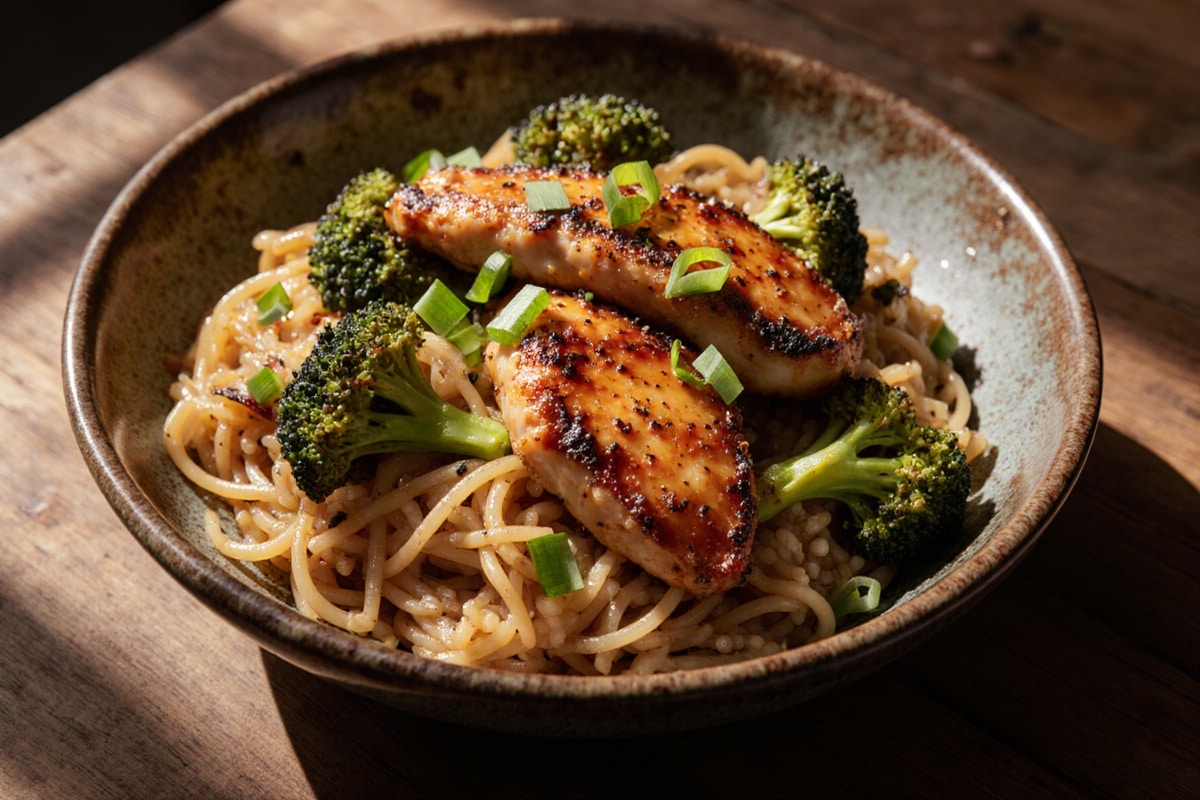

Gordon Ramsay Chicken Broccoli Rice Noodles
Ingredients
Equipment
Method
- Bring chicken to room temperature for 10–15 minutes. Season with salt and pepper 5 minutes before cooking.
- Heat a heavy-based frying pan over high heat for 2–3 minutes. Add 30 ml of neutral oil.
- Lay chicken pieces in a single layer and cook undisturbed for 3–4 minutes per side (breast) or 3–4 minutes per side (thigh strips) until browned and cooked through. Rest for 3–5 minutes to redistribute juices.
- In the same pan, add more oil and stir-fry ginger and garlic for 20–30 seconds until fragrant. Add blanched broccoli and bell pepper, and stir-fry for 1–2 minutes.
- Add drained noodles and pour two-thirds of the prepared sauce over everything. Toss for 1–2 minutes until noodles absorb the sauce.
- Return chicken to the pan, toss gently for 30–60 seconds until heated through. Finish with sesame oil and spring onions, adjusting seasoning as needed.
- Lower heat to medium-low and stir in cornstarch slurry. Mix until the sauce thickens and becomes glossy, about 30–60 seconds.
- Let rest off the heat for 1–2 minutes and then plate, garnishing with spring onions and optional sesame seeds.
- Serve immediately with lime wedges on the side.
Nutrition
Notes
Love this recipe?
Give us 5 stars and comment!Video tutorial: gordon ramsay chicken broccoli rice noodles
FAQ – gordon ramsay chicken broccoli rice noodles
Can I use frozen chicken for this recipe?
Absolutely! Just make sure to thaw it properly in the fridge for 24 hours or under cold running water. Cook it immediately after thawing to ensure safety.
What if my sauce turns out too salty?
Don’t panic! You can add a bit of sugar or honey to balance the saltiness. A splash of additional vinegar can also brighten the sauce without making it taste flat.
How do I avoid overcooked broccoli?
Blanching is your best friend! Just 60-90 seconds in boiling salted water, followed by a quick shock in ice water. If you skip that, stir-fry for 3-4 minutes instead.
Conclusion
Nailing this Gordon Ramsay chicken broccoli rice noodles means you’ve just leveled up your cooking game. The aroma of seared chicken mingling with the brightness of broccoli and the chew of perfectly cooked rice noodles is nothing short of a triumph. When you take that first bite, you’ll feel like a culinary rock star — the texture, color, and flavor hitting all the right notes. Now it’s your turn — take this recipe, make it bold, and let your kitchen sizzle with personality. Go get those chopsticks!