Gordon Ramsay Greek Salad Recipe
Gordon Ramsay Greek salad is where fresh meets fabulous in a bowl! I’ll never forget the first time I made one—it was a slap in the face of blandness, and I was hooked. From crisp tomatoes to creamy feta, this salad is bursting with flavor and a symphony of textures. And the best part? It takes just minutes to whip up, making it an easy choice for dinner or as a sidekick to grilled meats. Trust me, mastering this salad will have you feeling like a kitchen superstar, ready to impress without breaking a sweat.
Recipe at a Glance – gordon ramsay greek salad
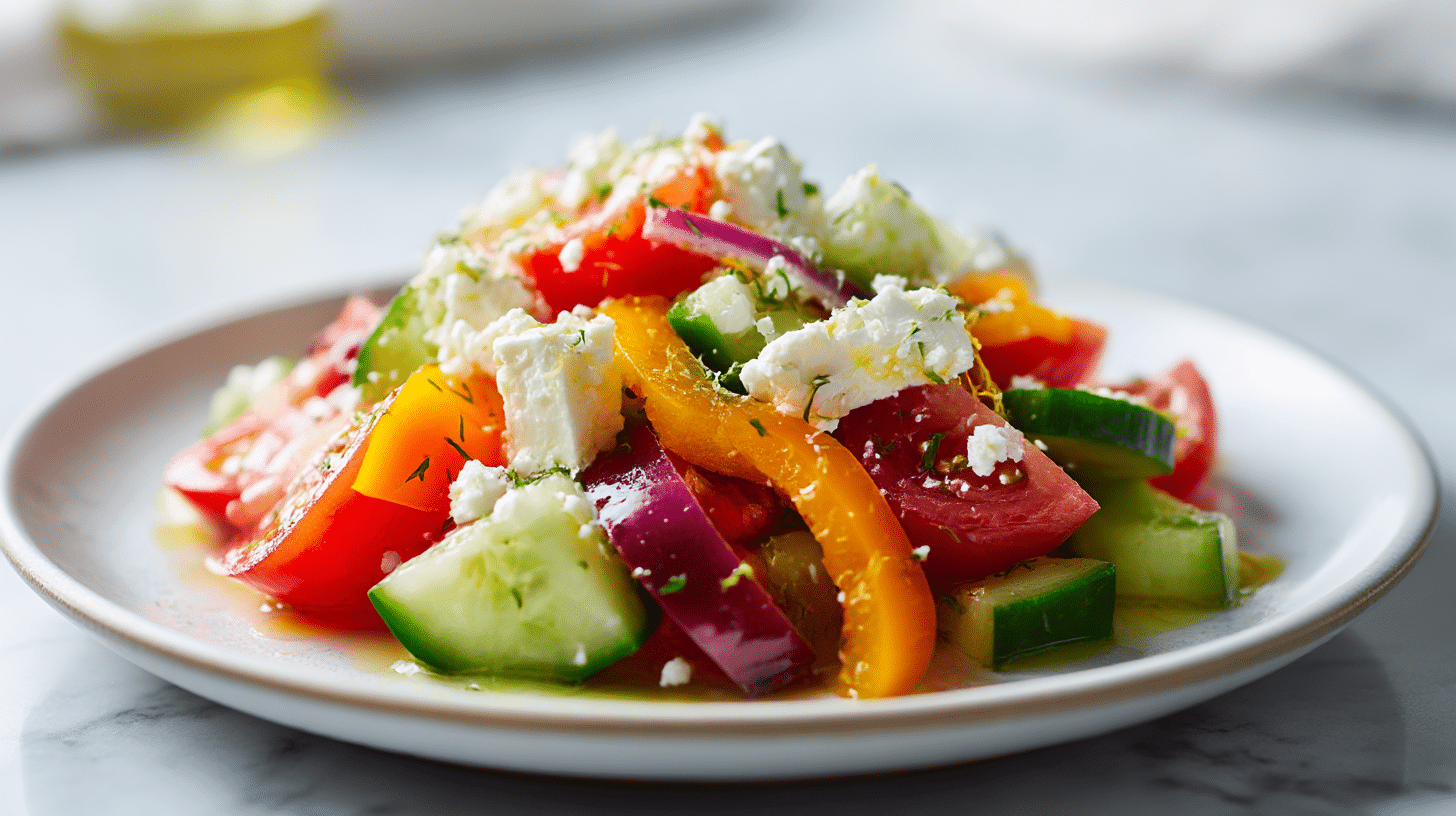

Gordon Ramsay's Greek Salad
Ingredients
Equipment
Method
- Chop tomatoes into wedges, slice cucumbers into half-moons, and dice bell peppers finely.
- Cut feta into cubes or crumble it; let it rest at room temperature for 15–20 minutes.
- In a bowl, blend lemon juice, olive oil, salt, and oregano to create the dressing.
- Layer cucumbers and bell peppers at the bottom of a serving bowl, then add tomatoes and top with feta.
- Drizzle the dressing evenly over the salad, about 3 tablespoons; avoid over-dressing.
- Gently toss the salad using hands or utensils to mix without breaking ingredients.
Nutrition
Notes
Love this recipe?
Give us 5 stars and comment!Core Ingredients for Greek Salad
Key Vegetables
Tomatoes, cucumbers, and bell peppers are essential for a classic Greek salad. I recommend using ripe tomatoes (around 300g), crunchy cucumbers (about 150g), and a bell pepper (100g) to add that sweet crunch. Freshness is key! Choose organic when you can.
Feta Cheese Selection
Feta cheese is the star of any Gordon Ramsay Greek salad. Go for a block rather than crumbles; it usually packs more flavor. A good-quality Greek feta, about 150g, should be creamy and rich. If it’s too salty for your taste, soak it in water for about 30 minutes before using it.
Seasoning Essentials
Seasoning can really make your dish shine. Use salt, black pepper, and oregano. Aim for about 1 teaspoon of dried oregano per salad for that authentic flavor. Don’t forget the lemon juice; about 1 tablespoon brightens everything up!
Olive Oil Types
A good olive oil is a must-have. I suggest using extra virgin, about 3 tablespoons, for its rich taste. You can also drizzle in some infused varieties for an interesting twist. Just make sure it’s cold-pressed for the best benefits.
Prep and Technique
Knife Skills for Vegetables
Cut tomatoes into wedges (about 2 cm), slice cucumbers into half-moons, and dice bell peppers finely (around 1 cm). A sharp knife is safer and easier—no mushy veggies allowed!
Preparing Feta Cheese
Once you’ve chosen your feta, cut it into cubes (about 1 cm) or crumble it to your liking. Using your hands for crumbling helps maintain the texture better than a fork. Let it sit at room temperature for 15–20 minutes to bring out the flavors before adding it to your salad.
Mixing Flavors
Lemon juice, olive oil, salt, and oregano blend together beautifully, so mix them in a bowl before tossing with the salad. This helps combine the flavors seamlessly, avoiding that unpleasant layer of dressing at the bottom. A good mix is key!
Infusing Olive Oil
To enhance the flavors, think about infusing your olive oil. Add garlic or fresh herbs (like rosemary) and let it sit for a few hours. Just a teaspoon can bring a whole new layer to your Gordon Ramsay Greek salad.
Assembling the Salad
Layering Ingredients
When I assemble the salad, start with the sturdy vegetables like cucumbers and bell peppers at the bottom. Alternate layers to avoid crushing the more delicate ingredients. Place the feta on top for a beautiful finish!
Dressing Application
Drizzle the dressing evenly over the layers. Avoid drowning your salad; about 3 tablespoons is plenty. You want each bite flavorful without it being soaked in dressing.
Texture Considerations
Finding the right balance of crunchy and creamy textures is essential. The freshness of the vegetables paired with the creaminess of the feta is what makes it enjoyable. If the texture seems off, check the thickness of your cut veggies—they should be uniform for the best mouthfeel.
Final Tossing Technique
Gently toss the salad with your hands or two utensils to mix everything without breaking it apart. Don’t overdo it! A light toss ensures all ingredients are coated without turning to mush.
Variations and Adjustments
Ingredient Substitutions
If you’re missing a key ingredient, swap cucumbers for zucchini or use goat cheese instead of feta for a different spin. Avocados can also add creaminess, so feel free to experiment with what you have while keeping the balance in mind.
Regional Twists
Explore different flavors by adding capers or artichoke hearts. If you’re feeling adventurous, try an Italian twist with fresh basil or a Moroccan touch with preserved lemons to breathe new life into the classic.
Herb Additions
Beyond oregano, think about mint or parsley for added freshness. If you’re using fresh herbs, gently tear them to release their oils. About 1 tablespoon of mint can give a nice kick, so don’t hesitate to give it a try.
Plating Ideas
Presentation counts! Use a rustic wooden bowl or a sleek glass bowl to showcase the vibrant colors. You can garnish with extra herbs or a lemon wedge on the side to make it visually appealing!
Troubleshooting
Excessive Saltiness
If your salad ends up tasting too salty due to the feta, add diced potatoes to absorb some of the salt, or incorporate more veggies to create balance. Sometimes, a pinch of sugar can help neutralize the saltiness too!
Wilted Greens
If those greens look sad, revive them with ice water. Soak them for about 10 minutes, and they’ll regain their crispiness. Always wash your greens just before using to avoid premature wilting.
Insufficient Flavor
If the salad isn’t flavorful enough, adjust your seasoning. A splash more lemon or a drizzle of balsamic vinegar can really elevate the taste. Remember to taste and adjust; it’s essential in any dish.
Uneven Dressing Distribution
To ensure the dressing spreads evenly, mix it separately before drizzling or emulsify it well. Tossing gently helps each part get the right amount of dressing without overpowering any single ingredient.
Frequently Asked Questions
Storage Recommendations
To keep your Greek salad fresh, store it in an airtight container. It’s best enjoyed within a day or two, but if you’ve already dressed it, eat it within 24 hours.
Preparing Ahead
You can prep ingredients earlier, but keep dressing separate until right before serving. This will prevent sogginess! If you store cut veggies properly in the fridge, they should last a day.
Choosing Olive Oil
When you pick olive oil, look for “extra virgin” on the label and check for a harvest date. Quality matters here, so don’t skimp! The flavor should be fruity and slightly peppery, not rancid or oily.
Serving Temperature
The best way to enjoy Greek salad is chilled but not ice cold. Let it sit for about 10–15 minutes after taking it out of the fridge to enhance those flavors!

Step-by-Step Video: The Greatest Greek Salad of All Time With Easy Homemade …
FAQ – gordon ramsay greek salad
How should I cut the vegetables?
Uniform sizes ensure even flavor and texture; cut tomatoes into wedges and cucumbers into half-moons.
What type of feta cheese is best?
Use Greek-style feta for authenticity; it should be creamy and tangy.
Can I prepare the salad in advance?
Yes, chop vegetables, but add dressing just before serving to maintain crispness.
How can I prevent excess saltiness?
Rinse feta in cold water before using if it’s too salty.
What herbs can I add?
Fresh oregano or parsley enhances flavor, but use them sparingly to avoid overpowering the dish.
Before you start cooking…
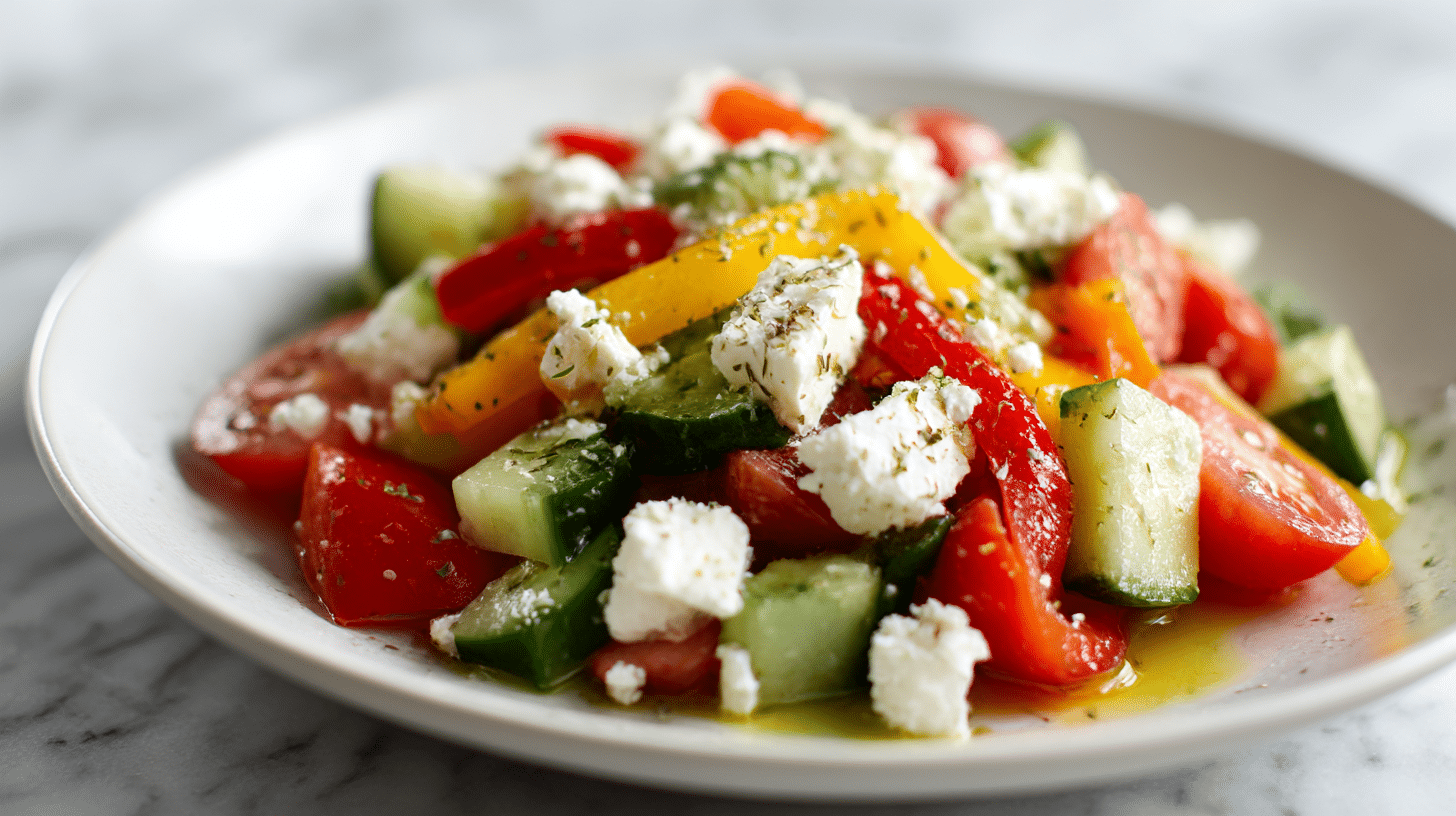
You’ve made it, and now your Gordon Ramsay Greek salad is ready to rock the table! The vibrant colors, the crunchy veggies, and that rich, creamy feta will have everyone diving in. Finally getting that balance of freshness and zest feels like a culinary victory, doesn’t it? Each bite is an explosion of flavors that’s bound to impress. Now it’s your turn—make it bold, make it yours.