Gordon Ramsay Duck Breast Salad Recipe
Gordon Ramsay duck breast salad isn’t just a dish; it’s an adventure for your taste buds! I remember the first time I attempted to get that sweet, succulent duck to pair with crisp greens, and let me tell you, there was some serious trial and error. But once I figured out the secret to crispy skin and a dressing that tied it all together, it transformed the way I approached salads. We’re talking layers of flavor and a perfect balance that’ll have your guests clamoring for seconds. With a little prep, you’ll have a gorgeous plate that’s as easy as it is impressive—confidence in every bite, I promise!
Recipe at a Glance – gordon ramsay duck breast salad
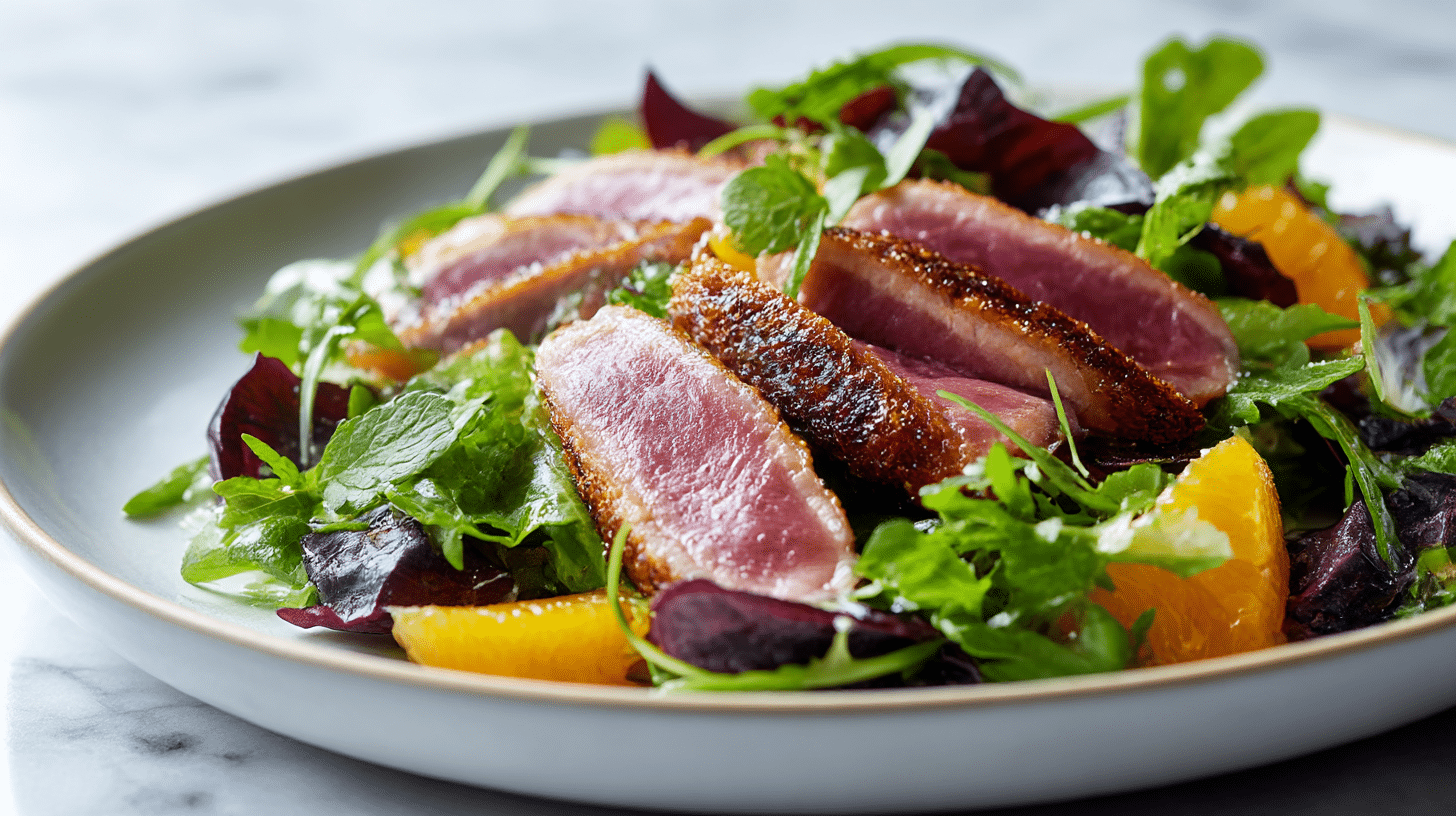

Gordon Ramsay–Style Duck Breast Salad
Ingredients
Equipment
Method
- Preheat your oven to 200°C (390°F).
- Score the duck breast skin, making shallow cuts about 1 cm apart. This helps render fat while cooking.
- Place the duck breast skin-side down in a cold skillet over medium heat. Cook for about 8-10 minutes until the skin is golden and crispy.
- Transfer the duck to the preheated oven and finish cooking for 5-7 minutes to reach an internal temperature of 54-57°C (130-135°F) for medium-rare.
- Let the duck rest for 5-10 minutes before slicing against the grain to ensure tenderness.
- While the duck is resting, prepare your salad. Wash and dry the greens, and have your dressing ready.
- Whisk together olive oil, balsamic vinegar, Dijon mustard, salt, and pepper. Optionally add honey for sweetness.
- Assemble the salad by starting with a base of greens, layering on the sliced duck, and adding any additional toppings.
- Drizzle the vinaigrette over the assembled salad and toss gently. Garnish with herbs or citrus zest.
Nutrition
Notes
Love this recipe?
Give us 5 stars and comment!Core Ingredients for Duck Breast Salad
Duck Breast Selection
When selecting duck breast, choose high-quality, fresh cuts. Look for well-marbled pieces with a good amount of fat to achieve that crispy skin. A weight of 200-250 g per breast works well. If you can, go for Moulard ducks; they provide rich flavors.
Salad Greens Variety
Use a mix of greens to enhance your Gordon Ramsay duck breast salad. Arugula, frisée, and baby spinach make excellent choices. They offer a peppery kick and crisp texture that balance the richness of the duck.
Aromatic Additions
Don’t skip the aromatics! Fresh herbs like parsley, chives, or thyme add layers of flavor to your dish. You might also want to use citrus fruits for a zesty twist, like a splash of lemon or some orange segments.
Dressing Components
A good vinaigrette pulls everything together in your duck breast salad. Mix olive oil, balsamic vinegar, and Dijon mustard for a simple yet flavorful dressing. For the perfect balance, aim for a 3:1 ratio of oil to vinegar.
Prep and Technique
Duck Breast Scoring
Scoring the skin is key for crispy results. Make shallow cuts into the fat, but don’t cut into the meat—about 1 cm apart works perfectly. This helps the fat render while cooking and keeps the meat juicy.
Salad Mise en Place
Get everything ready before you start cooking. Wash and dry your greens, chop any additional toppings, and prepare your dressing. A tidy workspace makes everything go smoother.
Dressing Preparation
Whisk your dressing ingredients together in a bowl. Add salt and pepper to taste, and you might want to throw in a dash of honey for some sweetness. If it’s too thick, add a bit of water or more vinegar until it reaches your desired consistency.
Heat Setup for Duck
Preheat your oven to 200°C (390°F). Start with a cold pan to slowly render the fat from the duck. This approach helps achieve that golden, crispy skin. Keep an eye on it; we want to avoid setting off the smoke alarm!
Cooking Steps for Duck
Searing Duck Breast
Place the duck breast skin-side down in the cold pan over medium heat. Cook for about 8-10 minutes until the skin is golden and crispy. You’ll love that beautiful sizzle, so don’t wander off!
Oven Finishing Temperature
Once seared, transfer the duck to the oven for about 5-7 minutes. Aim for an internal temperature of 54-57°C (130-135°F) for medium-rare. Use a meat thermometer to check it—trust me, it’s worth it.
Resting Duck Philosophy
Resting is essential for juicy meat. After cooking, let the duck sit for about 5-10 minutes before slicing. It helps the juices redistribute. Don’t rush this step; it’s important.
Final Slicing Technique
When it’s time to slice, cut against the grain to ensure tenderness. Aim for thin, diagonal slices to highlight that lovely color and texture.
Combining Components
Salad Assembly
Start with a generous base of your chosen greens. Layer on your duck slices, then add any extra toppings. Think nuts, cheese, or fruits. Get creative!
Dressing Application
Once your salad is assembled, drizzle the vinaigrette over the top. Less is more—start with a little and add more if needed. Toss gently to coat; we don’t want a soggy salad!
Plating Techniques
Presentation matters! Use a ring mold for a layered look or simply fan out the duck slices atop the greens. Garnish with herbs or citrus zest for that professional touch. A good presentation enhances the eating experience.
Variations and Adjustments
Ingredient Swaps
Switch things up! If duck isn’t your style, try chicken or even grilled tofu for a vegetarian option. Experiment with fruits like pears or apples for unique flavor pairings.
Dressing Variants
If balsamic isn’t your favorite, whip up a citrus vinaigrette with orange juice and zest. Consider adding ginger for a little zip or swapping in apple cider vinegar for a sweeter touch.
Seasonal Ingredients
Make the most of fresh produce! In summer, toss in fresh tomatoes and cucumbers; in fall, think roasted squash or cranberries. Mixing in seasonal ingredients keeps the dish interesting.
Sides Suggestions
Looking for sides to go with your duck breast salad? Consider serving it with crispy potato wedges or a simple quinoa pilaf. Both add substance without overshadowing the main event.
Troubleshooting
Duck Skin Not Crispy
If your skin isn’t crispy, check that you started with a cold pan and rendered the fat properly. You can also increase the heat slightly during the last minutes of cooking to help it crisp up.
Overcooked Duck Issues
Uh-oh! If you’ve overcooked your duck, consider slicing it thinly and serving it on a salad with a bold dressing to offset the dryness. Adding some fruit can help brighten the dish.
Salad Wilted Look
If your salad looks sad and wilted, make sure you’re using fresh greens and that your dressing wasn’t applied too early, causing moisture loss. Dress it just before serving!
Dressing Too Heavy
Easy fix! If your dressing feels too heavy, whisk in a little water or more vinegar to lighten it up. Tasting is key; adjust with seasonings as needed for the right balance.
Step-by-Step Video: Duck breast salad with orange, thyme, chicory and PX sherry …
FAQ – gordon ramsay duck breast salad
How do I score the duck breast?
Use a sharp knife to make shallow cuts in a diamond pattern through the skin, avoiding the meat, to help render the fat.
What temperature should I finish the duck in the oven?
After searing, finish in a 400°F oven for about 6–8 minutes for medium-rare.
Can I use pre-cooked duck?
Yes, you can use pre-cooked duck; just warm it gently before slicing and plating.
How can I ensure the salad stays fresh?
Dress the salad just before serving and keep greens refrigerated until ready to assemble.
Before you start cooking…
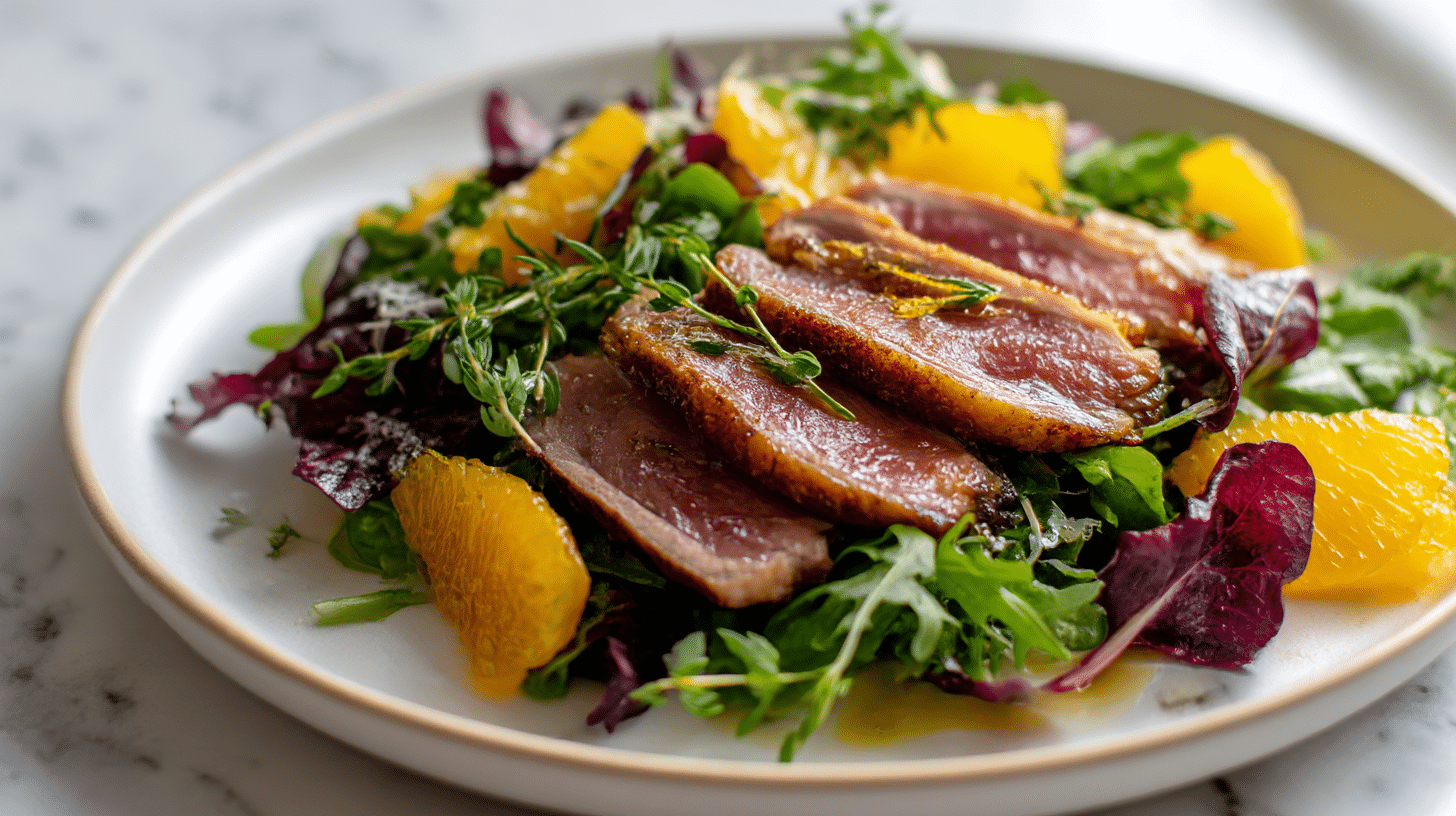
You’ve now conquered the Gordon Ramsay duck breast salad, and trust me, the satisfaction of nailing that crispy skin and vibrant salad is monumental. Picture this: the golden, glistening slices lay beautifully atop your fresh greens, glistening with a tangy vinaigrette. The aroma is mouthwatering, the texture is impeccable, and that first bite? It’s the kind of moment that makes all the kitchen efforts worth it. You’ve turned a classic dish into your signature creation. So, now it’s your turn — make it bold, make it yours.